
Capital Cocktails
Catching Up on the Drinking Scene in Washington, D.C.; Plus, an Edition of "Drinking With Landmarks."


The last time I was in Washington, D.C., for more than 24 hours, in 2018, I stayed at the LINE DC hotel, a converted church that sits on a crest in the Adams Morgan neighborhood. Recently, I happily returned and stayed at the LINE again. It remained much as I remembered it: a long line of stone steps leading into a lofty lobby with a balcony where an organ and/or choir once stood, looking every inch like a former church.
Different, however, were the drinks to be had there. In 2018, I was there to review the works of Corey Polyoka, who created the cocktails at A Rake’s Bar, chef Spike Gjerde’s restaurant up in the former balcony. A leading apostle at the time of sustainable mixology, Polyoka was dedicated to local, seasonal ingredients and low waste. In the lower lobby, as part of the restaurant Brothers and Sisters, longtime D.C./Virginia cocktail eminence Todd Thrasher was executing a much more accessible drinks program.
Neither of those bars/restaurants are at the LINE any longer. A Rake’s Progress closed in June 2020; Brothers & Sisters closed in 2021. Covid will do that. But, then, a lot has changed since 2018. This was brought home to me immediately by our Uber driver. Driving us from the airport to hotel, he pointed out a pulled-over car on the roadside and said, “Look! ICE!” Sustaining hospitality in the D.C. of the current administration is an uphill battle.
Taking the place of Brothers & Sisters in the lower lobby the LINE is a restaurant bar better than either of them, No Goodbyes. It’s been in place since 2021 and is overseen by Lukas B. Smith, who has worked at Jack Rose Dining Saloon and the rum distillery Cotton & Reed. Smith is an old-school cocktail revivalist, meaning he’s still cooking up his own custom potions behind the bar like it’s 2011. Look at the menu, which is divided between “Old Dogs” and “New Tricks,” and you’ll see drinks made with House Dry Vermouth, House-Made Spanish Vermouth Rojo, Peated Fernet and Marnier Sauvage (a take on Grand Marnier). There’s no heritage spirit brand that Smith doesn’t think he can improve upon.
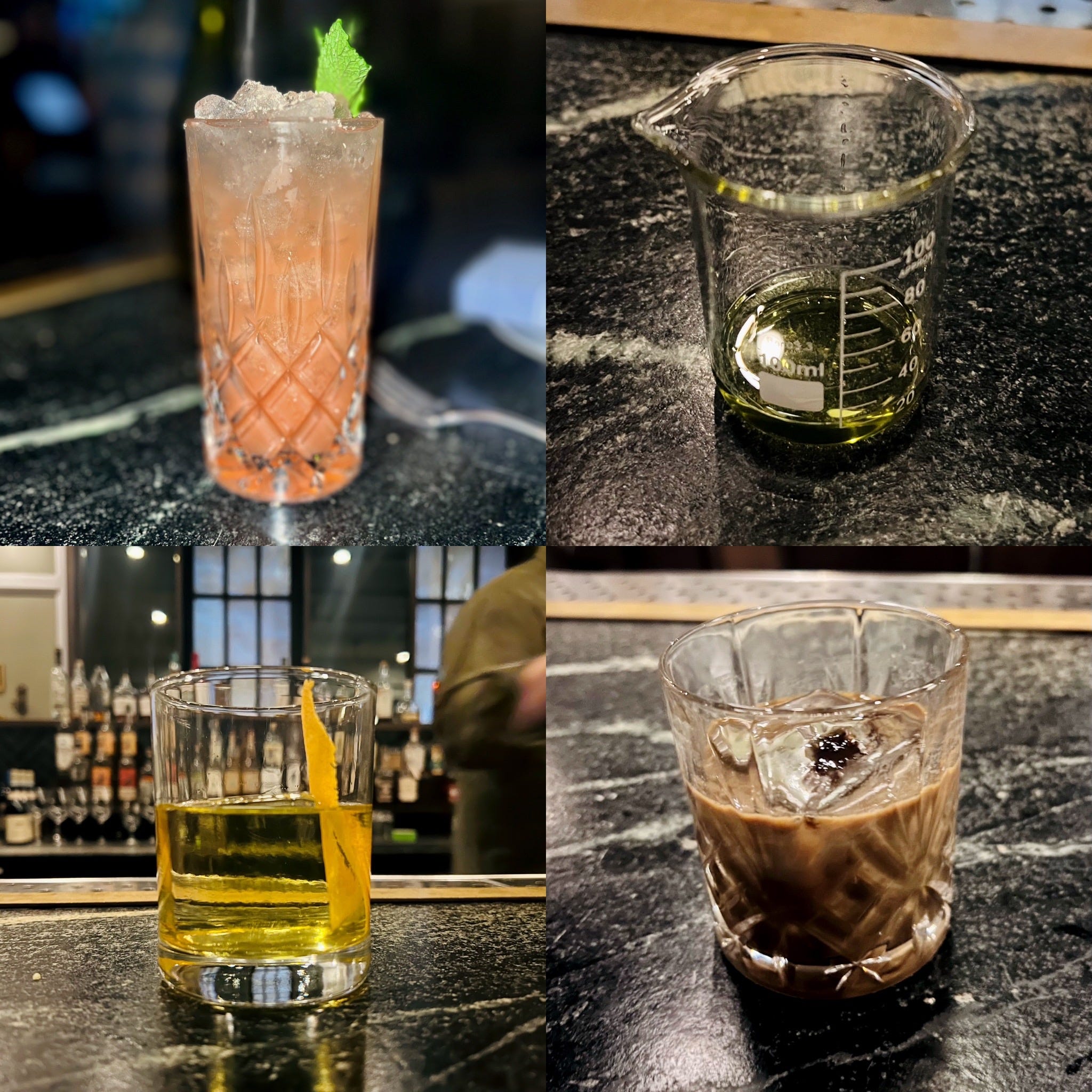
Our tasting began with the Love Child, a Chartreuse Swizzle riff made with grapefruit juice instead of lime, housemade falernum, and a house version of green Chartreuse called Genepy Savage. Now, trying to make your own Chartreuse is an old mixologist trick, but I’ve never tasted one as good as Smith’s. He said he’d been working on the recipe for about 15 years. It has a funky rum base and more than 80 ingredients. I believe the drinks creator, Marco Dionysos, would approve.
We also tried a twist on the White Negroni, a cocktail that Smith does not like, as least in its classic set-up of equal parts gin, Suze and Lillet Blanc. Smith feels the drink needs sugar and fruit. So he added Sauternes, the classic sweet wine from Bordeaux. The wine is used for dilution in the place of water. The rest of the drink is gin, Suze, and Dolin blanc vermouth. It’s called White Negroni Genshu.
Finally, there was the Glen Iskandar, a drink inspired by the ubiquitous catnip sweet known as Dubai chocolate. Smith called the cocktail an “anti-Espresso Martini.” (Offering alternatives to already established cocktails is a big thing at No Goodbyes.) Its base is GlenDronach 12 Scotch and a house coffee elixir. The drink was meant to echo the texture of a semifreddo.
None of the drinks we tried were on the menu yet. “This is the live lab Lukas experience,” Smith explained.
Smith says No Goodbyes is still a neighborhood bar at this point. I say it deserves a wider audience.
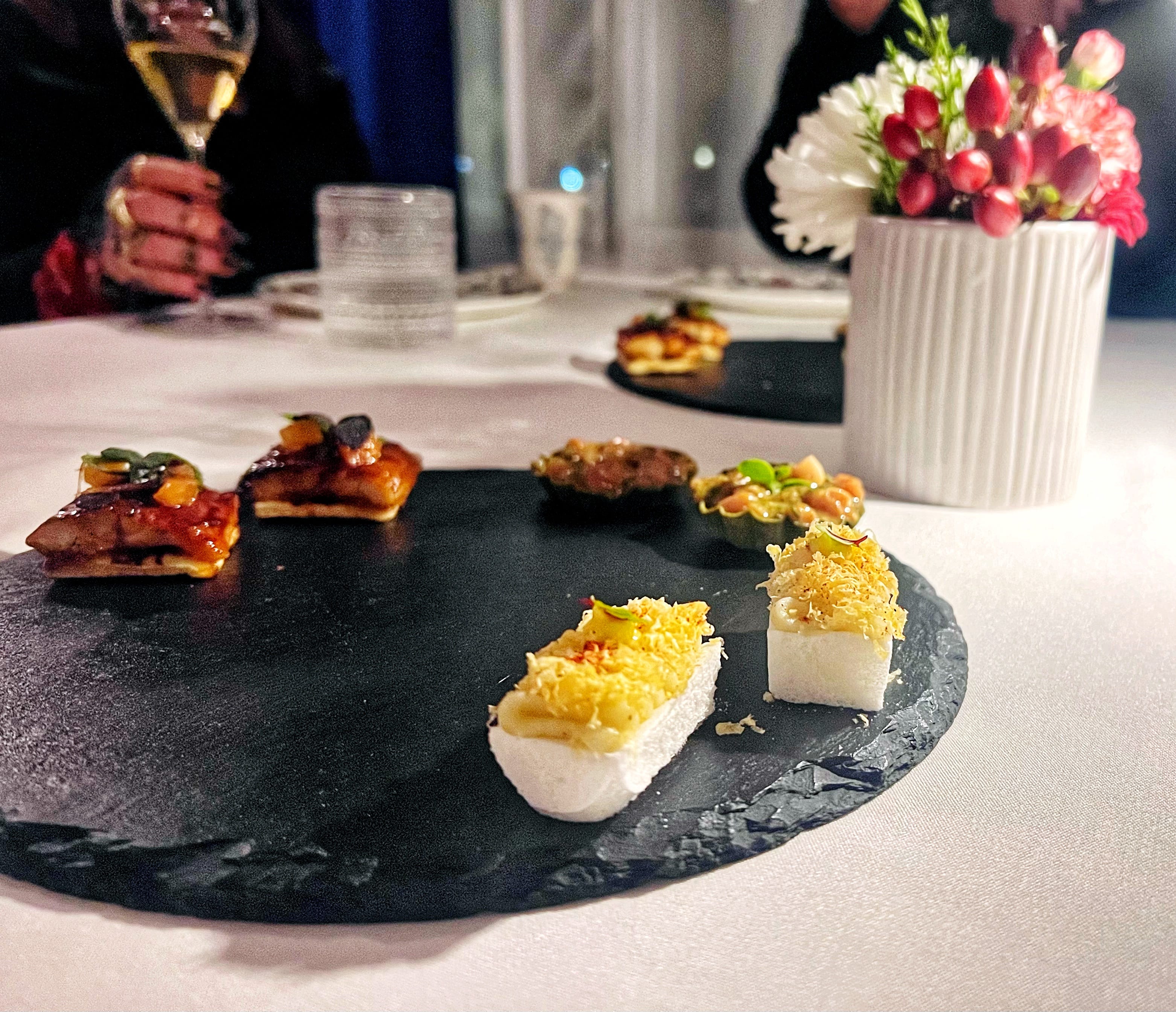
Thus fortified, we headed to Xiquet (pronounced chee-KETT), the Michelin-starred perch of chef Danny Lledó, who specializes in Valencian and Spanish cuisine. It was here that we switched from cocktails to what seemed like two dozen pours of wine to accompany all elements of the “menú del xef,” glasses which swam by my eyes like cars on a very long, mesmerizing freight train.
Not many get to enjoy this tasting menu. By my count, there are a total of six tables in the restaurant’s dining room. They are all within eyeshot of the ever-roaring open fire, over which most of the dishes are prepared in the small, glassed-in kitchen.
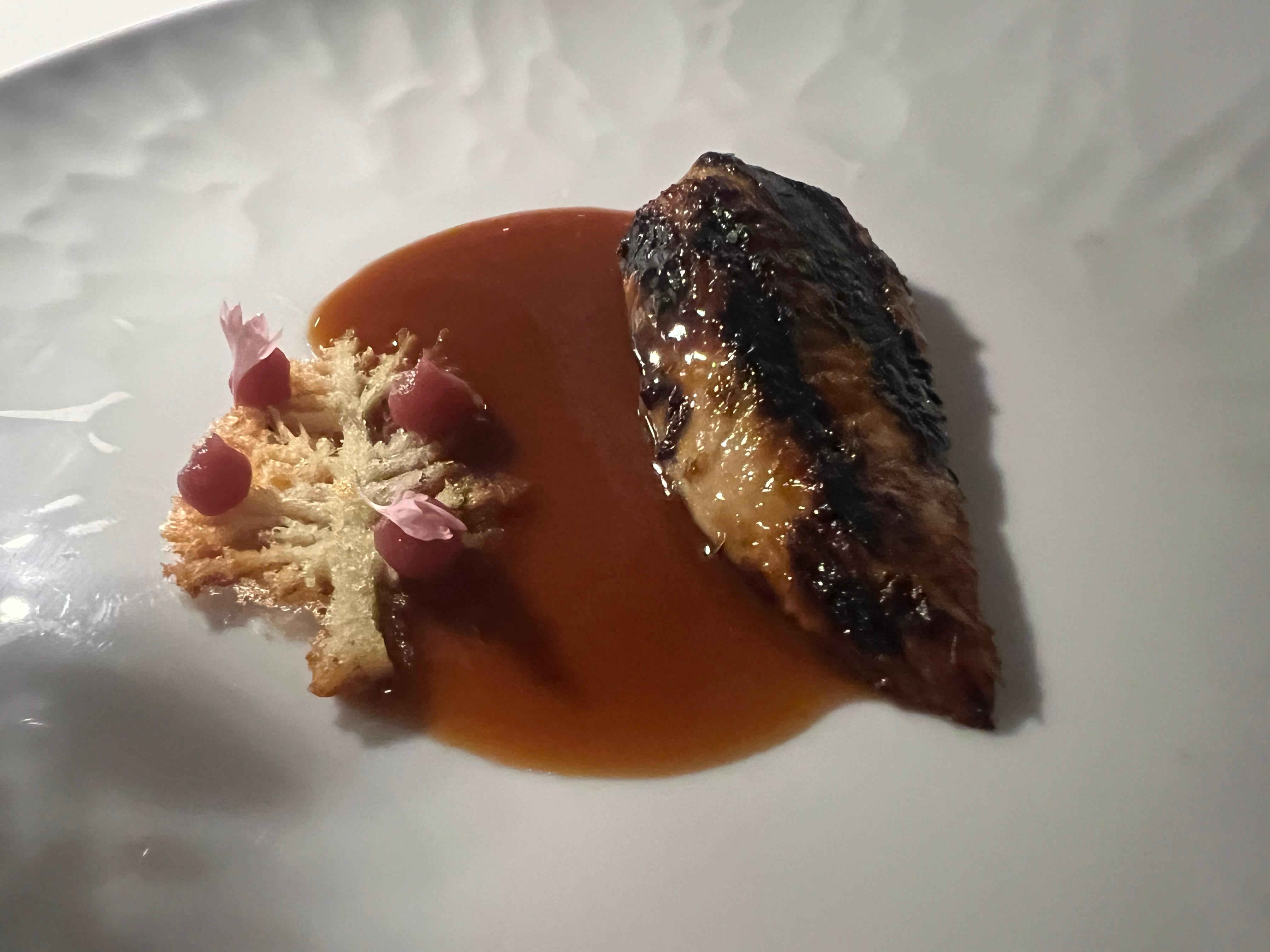
As with most tasting menus, a few dishes stood out as first among equals. For me, they were the Spanish smoked turbot with ash oil, fennel and leeks, and saffron sauce; the “partridge in a pear tree,” made of grilled partridge, partidge jus, and tiny red wine pears decorating a rosemary tree tuile (who doesn’t like a clever, Christmas-themed dish?); and, finally, Xiquet’s signature dish, the Iberic Wellington.
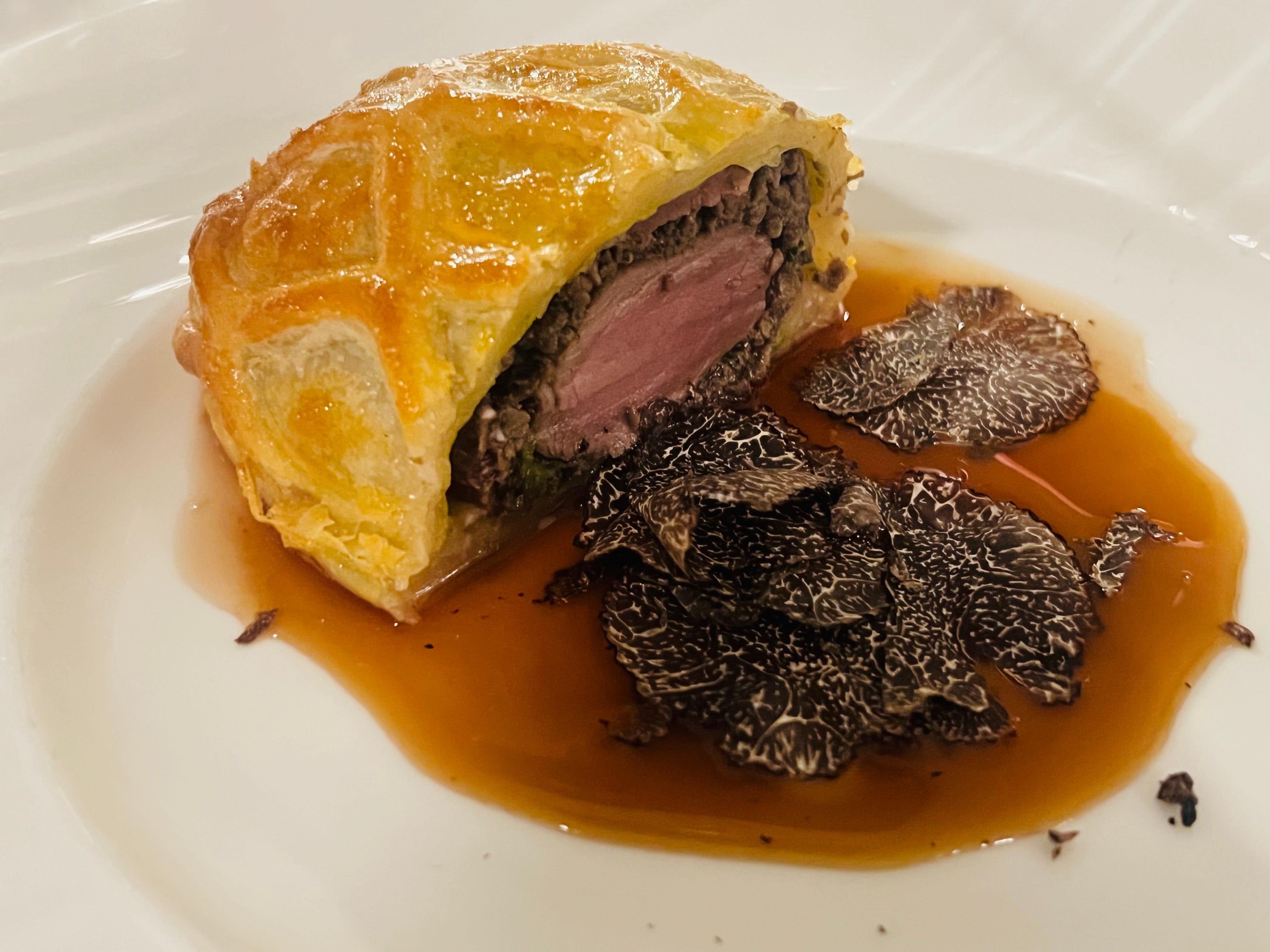
This decadent delicacy—made of Iberian pork tenderloin, foie duxelle, Iberian ham, cabbage and truffle pork jus—was carved table side by the chef. This is one of the only circumstances where I felt that truffles actually added anything other than cost to a dish. They were sublime.
Afterwards, we repaired to the mezzanine bar, which had a fine selection of Sherry, Port and Madeira. I knew I liked Iberian culinary culture for a reason.
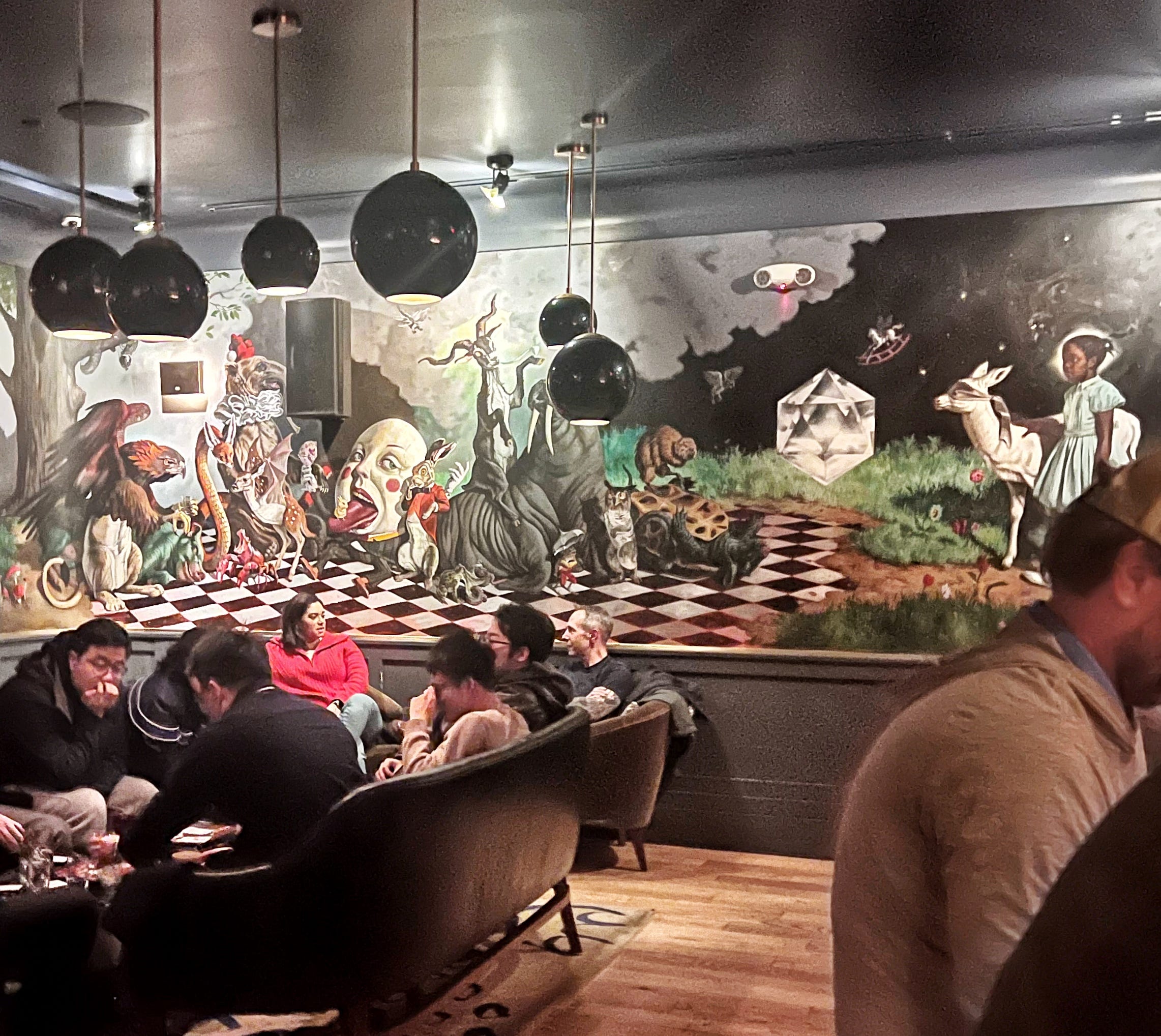
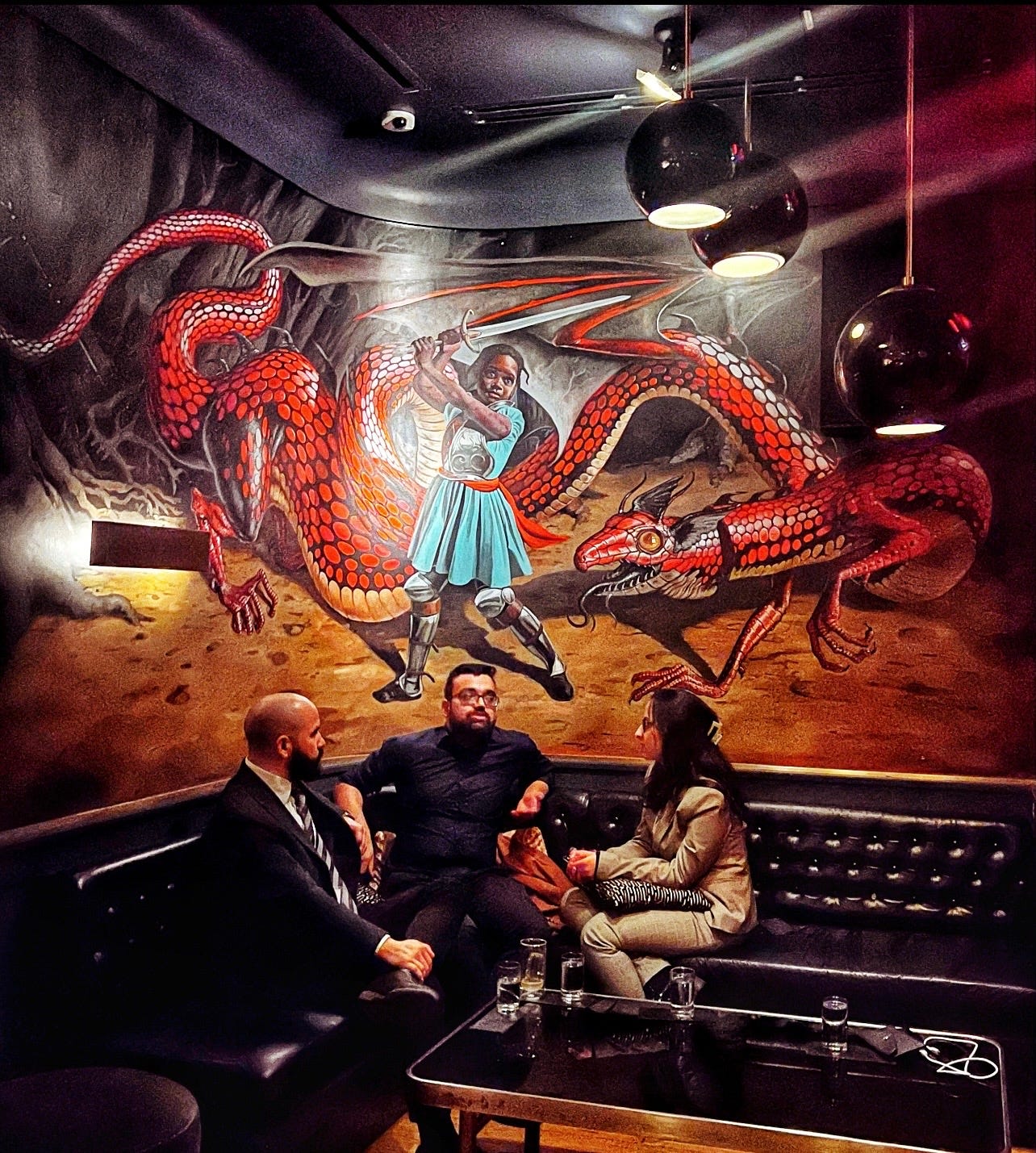
Allegory, housed inside the Eaton hotel, may have the most improbable cocktail bar concept of all time. It is communicated by the murals by Erik Thor Sandberg that span the walls of the bar. In the bars own words, they depict “Lewis Carroll’s Alice in Wonderland & Through the Looking Glass, but the deeper, underlying meaning is that the classic tale is told through the eyes of Ruby Bridges—the first Black child to desegregate the William Frantz Elementary School in Louisiana in 1960.”
The current bounded menu has the timely title of “Banned in D.C.” Again in the bar’s words, it was “Imagined in the context of Alice Through the Looking Glass, Ruby's journey continues 20 years after her historic integration, as she falls down a new rabbit hole and has to navigate a post-apocalyptic Washington, DC, where her story and others like it face censorship.”
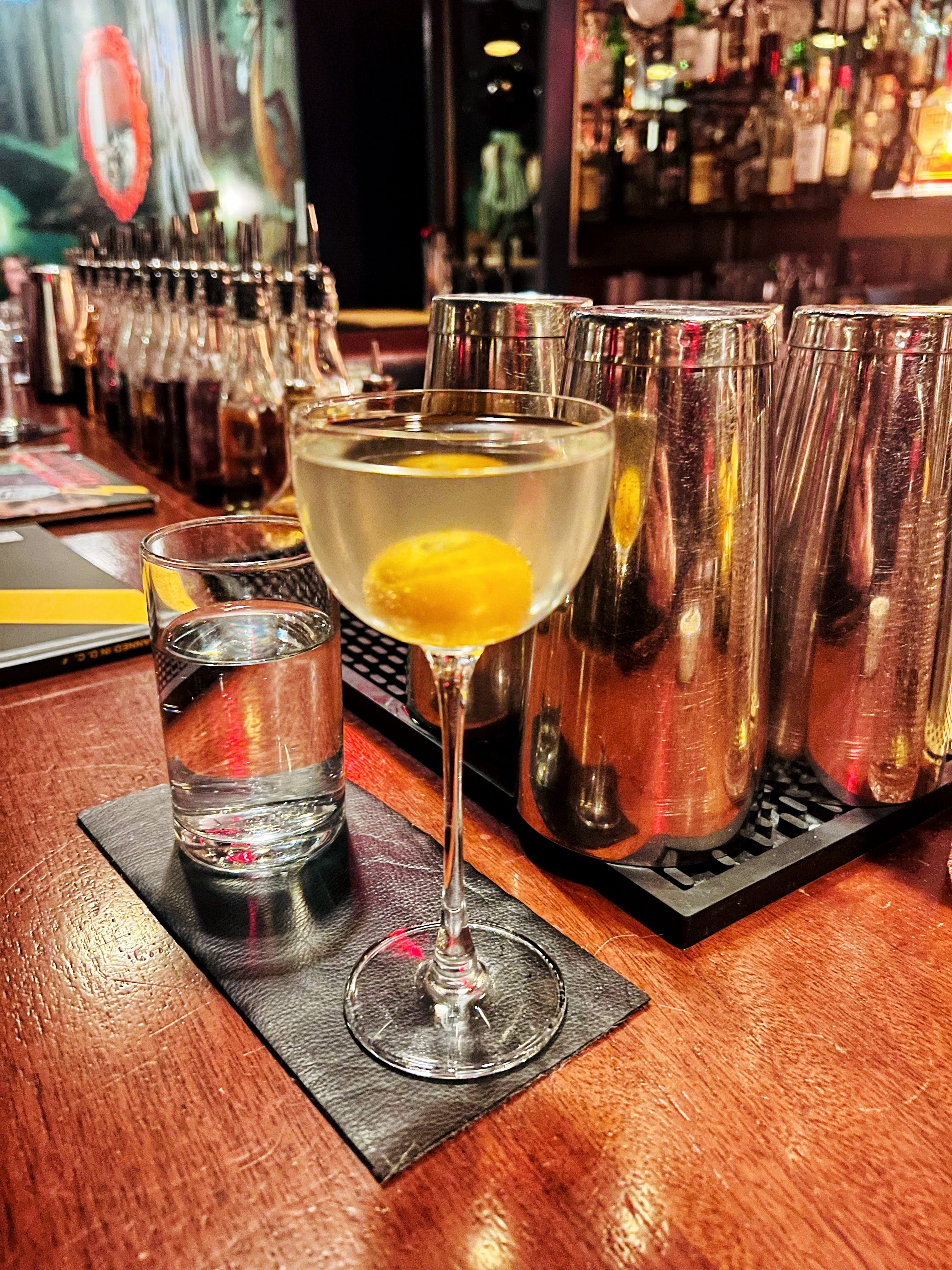
I began with the Leaving Babylon, a Martini spin by Graeson Cully made of Pisco, vermouth, Peruvian ground berry and the Mexican cane spirit called uruapan. I did not know this was the start of what would be a days-long Pisco adventure.
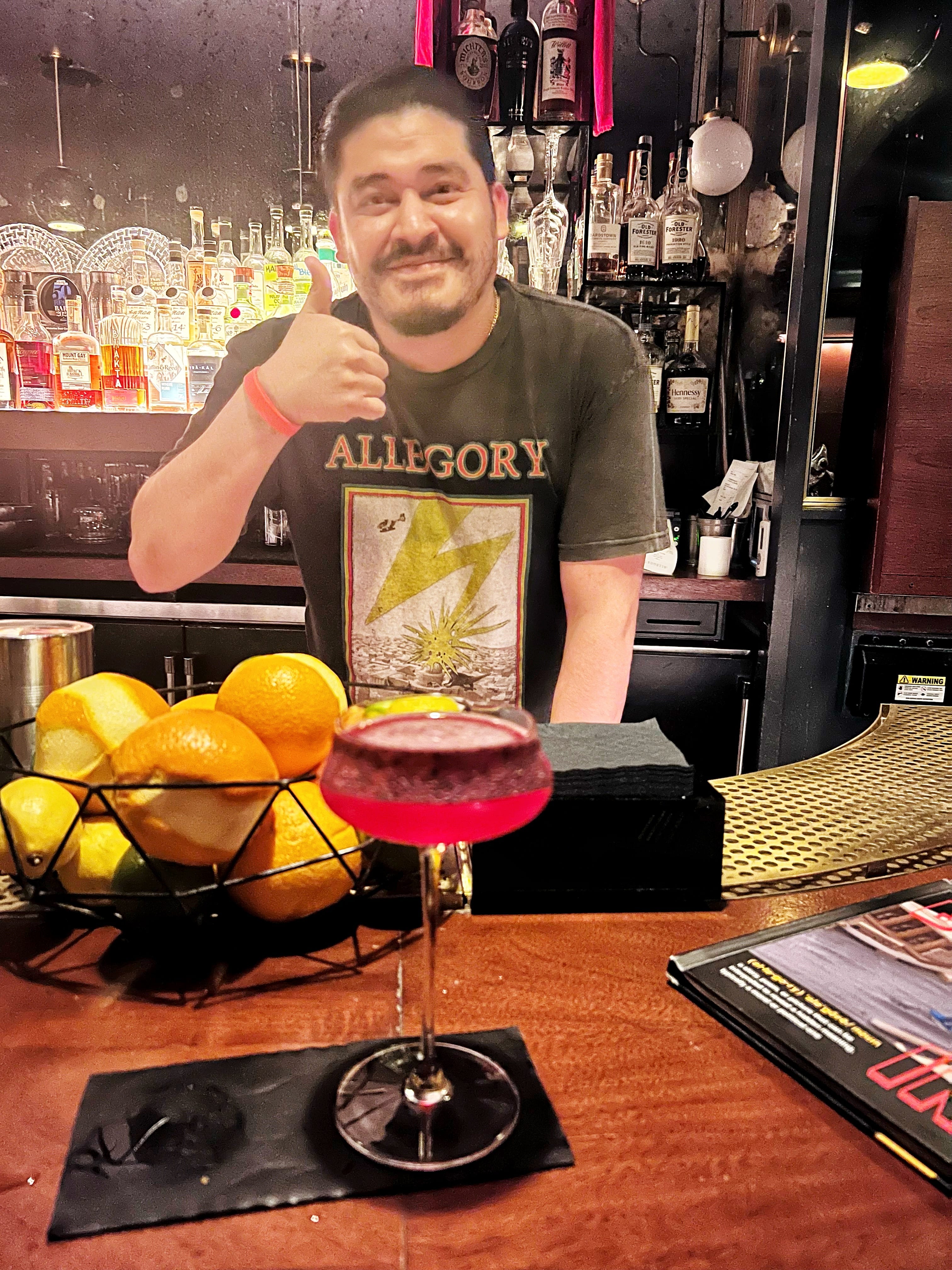
Mary Kate was talked into the Bluest Eye by the bartender, Julio Zavala, despite her reservations about an ingredient called “blueberry dill.” She turned out to like the cocktail, created by Greg LaMotte, very much—a Corpse Reviver riff with Botanist Gin, orange and lemon liqueur. In fact, she loved it, finding it bright and bitter. It was also beautiful, with a fruit roll-up as its fanciful garnish.
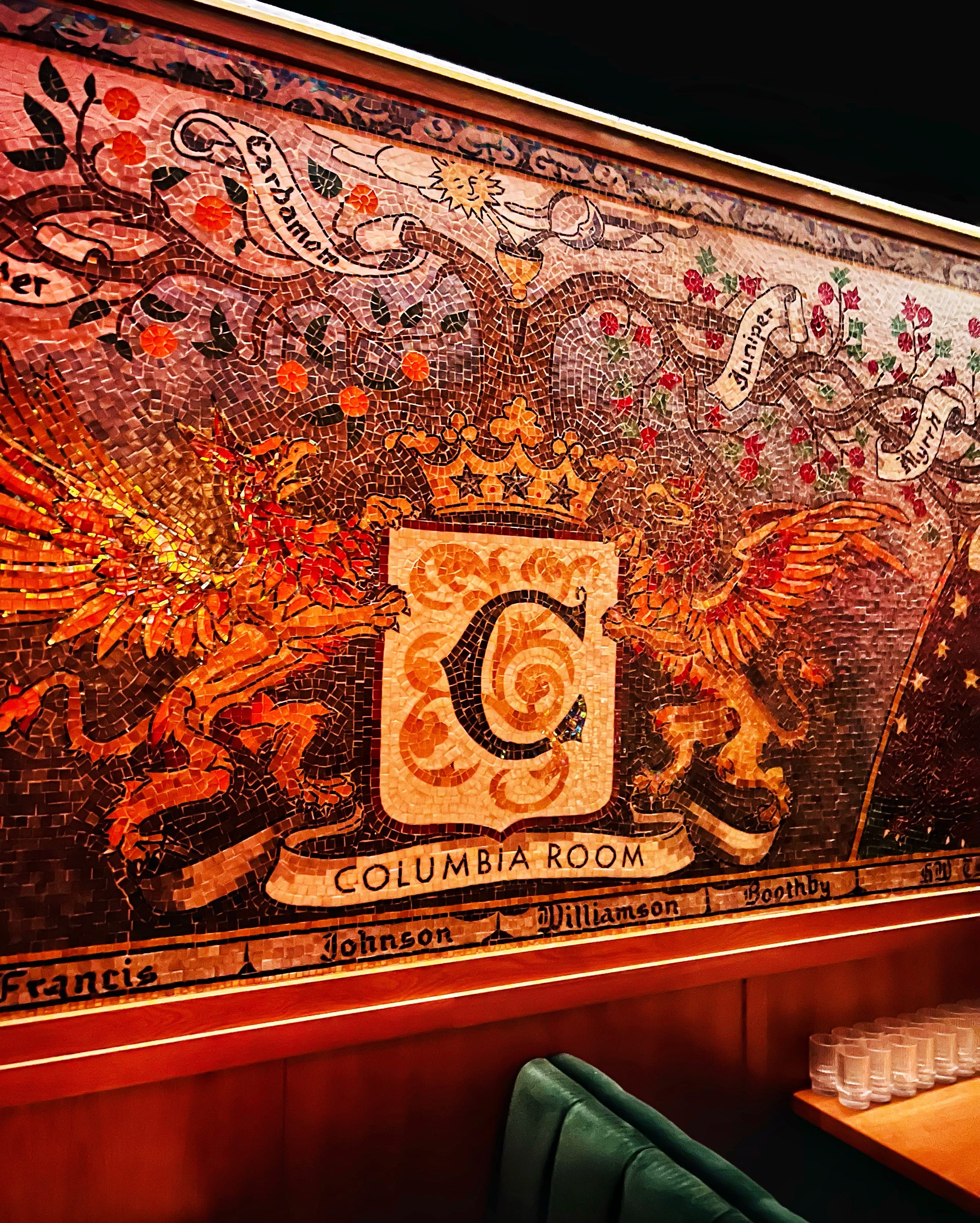
Death & Co.’s outpost in D.C. is located on isolated, atmospheric Blagden Alley. As I entered the familiar address, the first thing I looked for was a piece of art. It was an old, wall-length, ceramic mosaic, created by John DeNapoli with tiles sourced from Ravenna, Italy, depicting the grand history of the cocktail and, at the bottom border, listing the great mixologists of past and present. The work was the centerpiece of The Columbia Room, which this second-floor space was until it closed in 2022. Death & Co moved in shortly after.
At the Columbia Room, the artwork was behind the bar in the tasting room. At Death & Co., it is tucked over to the right side of the main bar, behind some booths. The D&Co. team recognized the mosaic for the instantly classic bar artifact that it was and preserved it. That’s a good thing. If this space is still a bar in 100 years, people will still be marveling at the work, the way they do with the Maxwell Parrish mural in the King Cole Bar in New York.
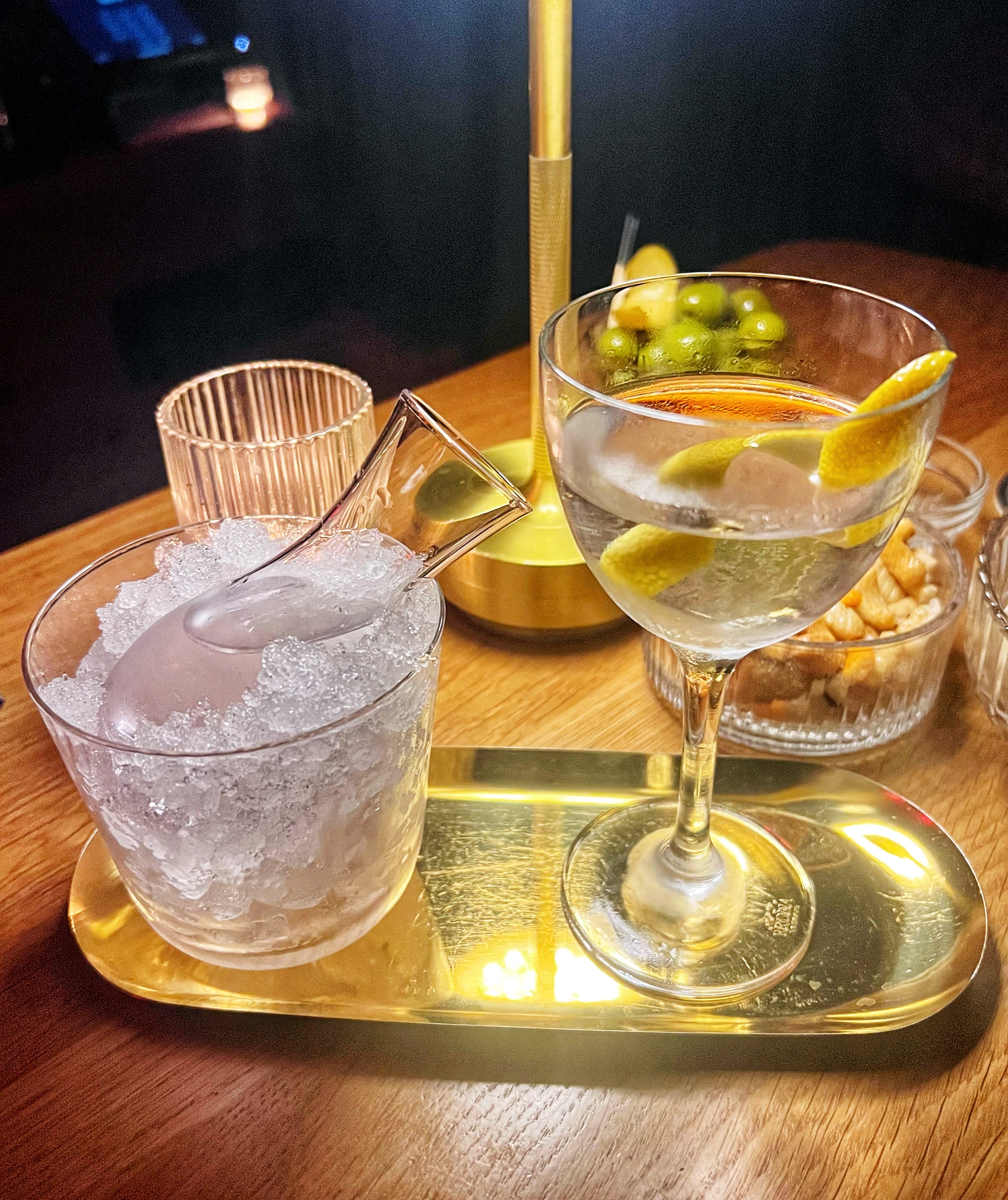
This Death & Co. is elegant, stylish and dark, as is the cocktail chain’s decorative wont. (The waiter thoughtfully loaned us a touch-sensitive lamp and tapped it to a brighter hue whenever we tried to read the menu.) So were the cocktails themselves. We were in good, steady hands for our last stop on the night.
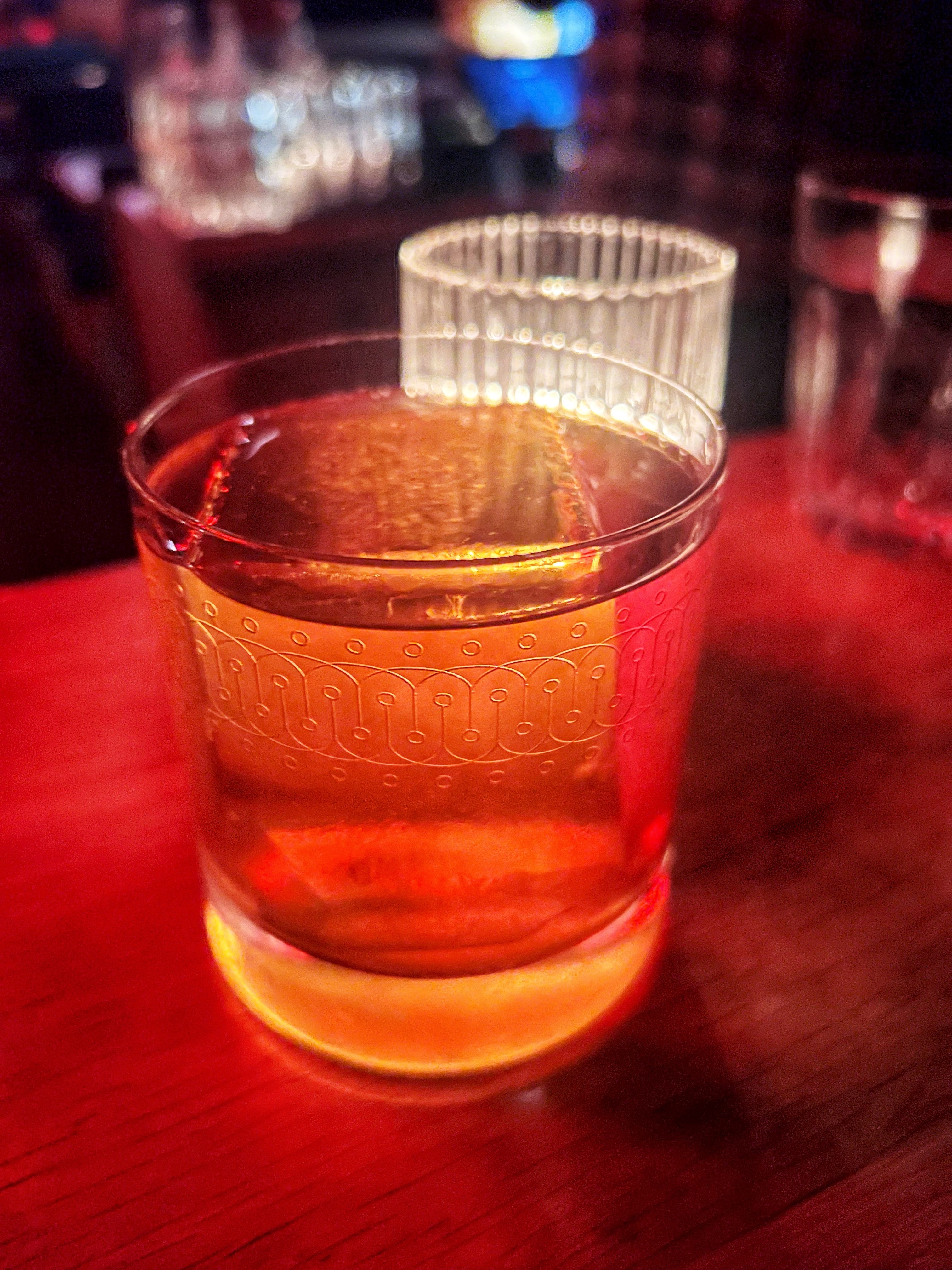
I began with the El Tiburón, which means “shark” in Spanish, and the mixture of St. George x D&C Barrel Select Gin, Del Maguey Vida de Muertos Espadin Mezcal, Ancho Reyes, Stevns Cherry, Angostura and Mole Bitters certainly packed a boozy bite. I ended with a Hakka Old-Fashioned, which I assume is wordplay on the famous D&Co. cockatil the Oaxaca Old-Fashioned. It was made of Old Grandad 114 Bourbon, Ten To One Oloroso Sherry Cask Rum, Don Ciccio Nocino, Chen Pi Soy, and Bittermen’s Aromatic Bitters. After that I was ready for bed.
Mary Kate began and ended with an off-menu dry Martini, which arrived on a tray with a sidecar, as is right and proper. In a town where things are changing rapidly, it is good to have a standard-bearer among the ranks of the city’s cocktail bars.
I was again reminded of The Columbia Room the next day, when we went to visit the National Archives, wherein lie the original copies of the Declaration of Independence, The Bill or Rights, The Constitution, and The Louisiana Purchase (which is a surprisingly short piece of work), along with 4 billion other documents.
The last time I was there was in 2015, as a panelist of part of a series of talks which were organized by Derek Brown, accompanying an exhibit called “Spirited Republic,” about the history of the cocktail in America. I was assigned the subject of the Dark Ages of the 1970s, for reasons I didn’t understand. Drinks were served and I recall the event getting delightfully raucous by the end.
This time we toured a new interactive exhibit called “The American Story.” It heavily employs AI, which frankly gave me the creeps. One creates an avatar at a large screen and then chooses among dozens of subjects to explore, leading to access to a smattering of digital versions of Archive documents. I noticed there was nothing to click called “food and drink”—an oversight, to be sure.
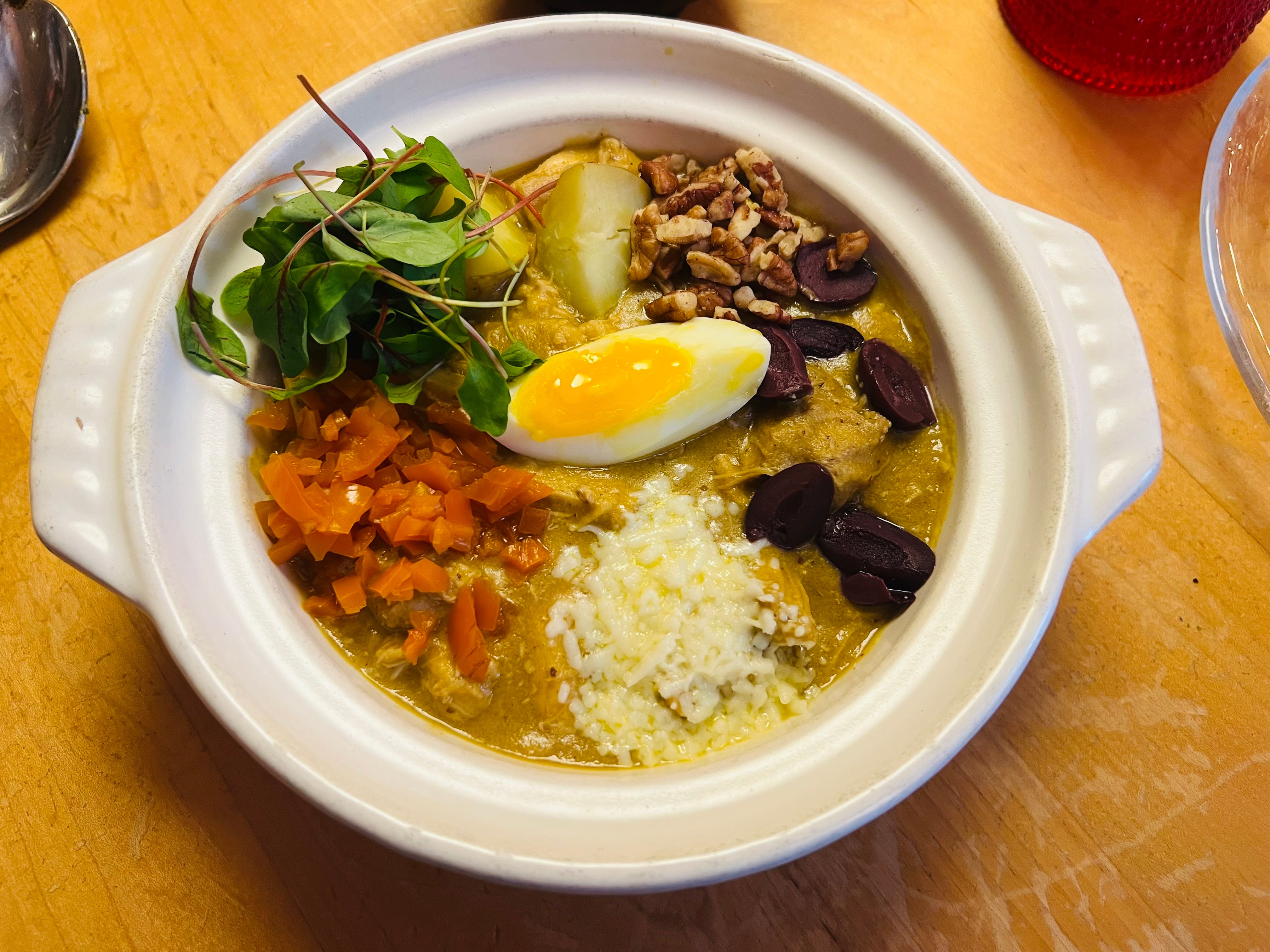
This was followed by a long, sumptuous lunch at China Chilcano, Jose Andrés’ Peruvian/Chinese/Japanese restaurant where I felt honor bound to try the Pisco Sour. It was very good and very big; a second cocktail was not required. My eye was immediately caught by something called Ají de Gallina, described as “Peru’s Most Precious Dish!” How could I not find out what that was? It turned out to be an a sort of chicken stew, with fresh cheese, pecans, botija olives, hard-boiled egg and rice, all in one pot. Superlative comfort food.
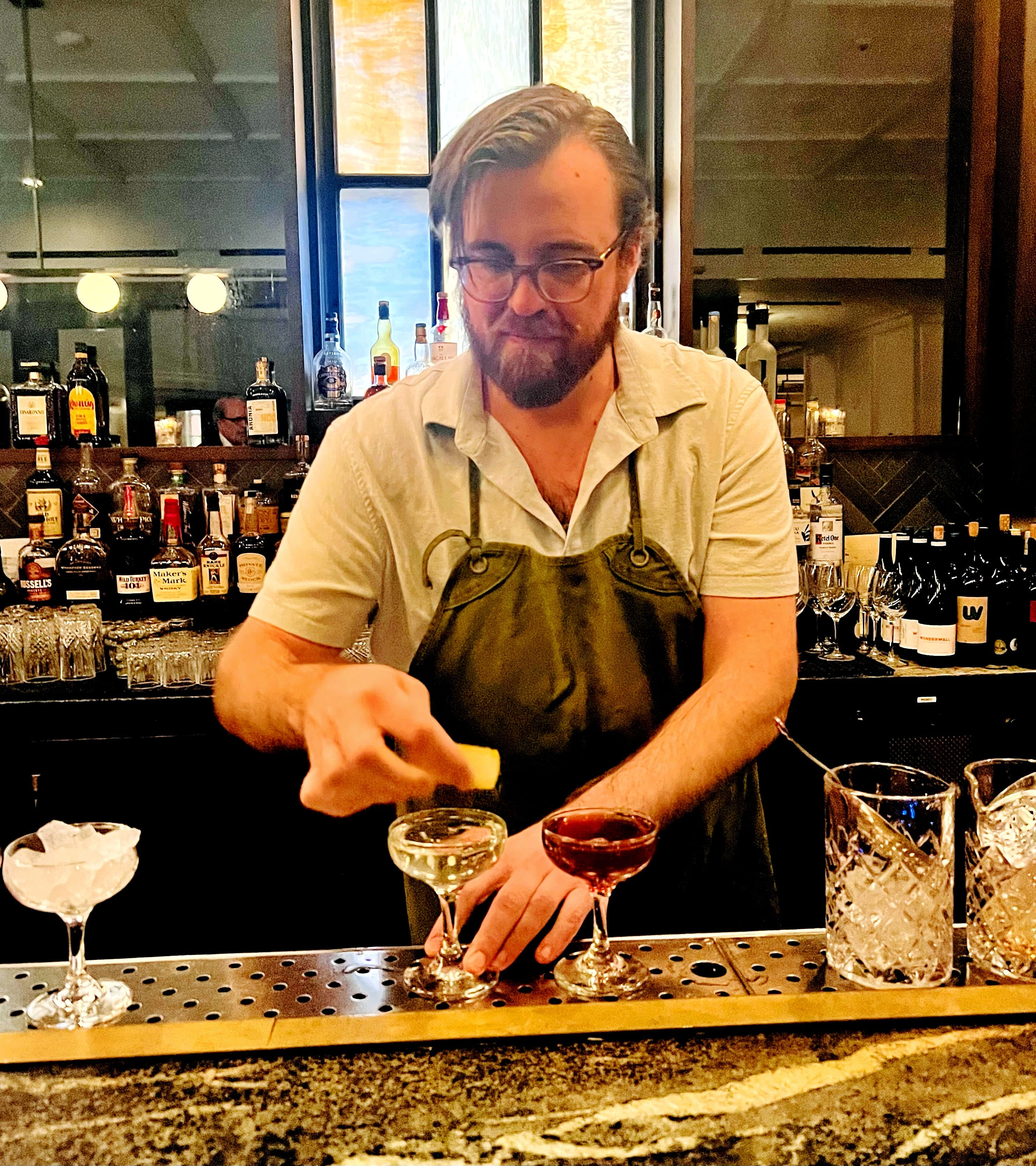
Prior to our second night out, we briefly parked ourselves at No Goodbyes again, where we were comforted by the knowledge that this DIY bar, and bartender Liam, could fashion a great, by-the-books Martini and Manhattan if you needed one. And at a special $9 happy hour price at that!
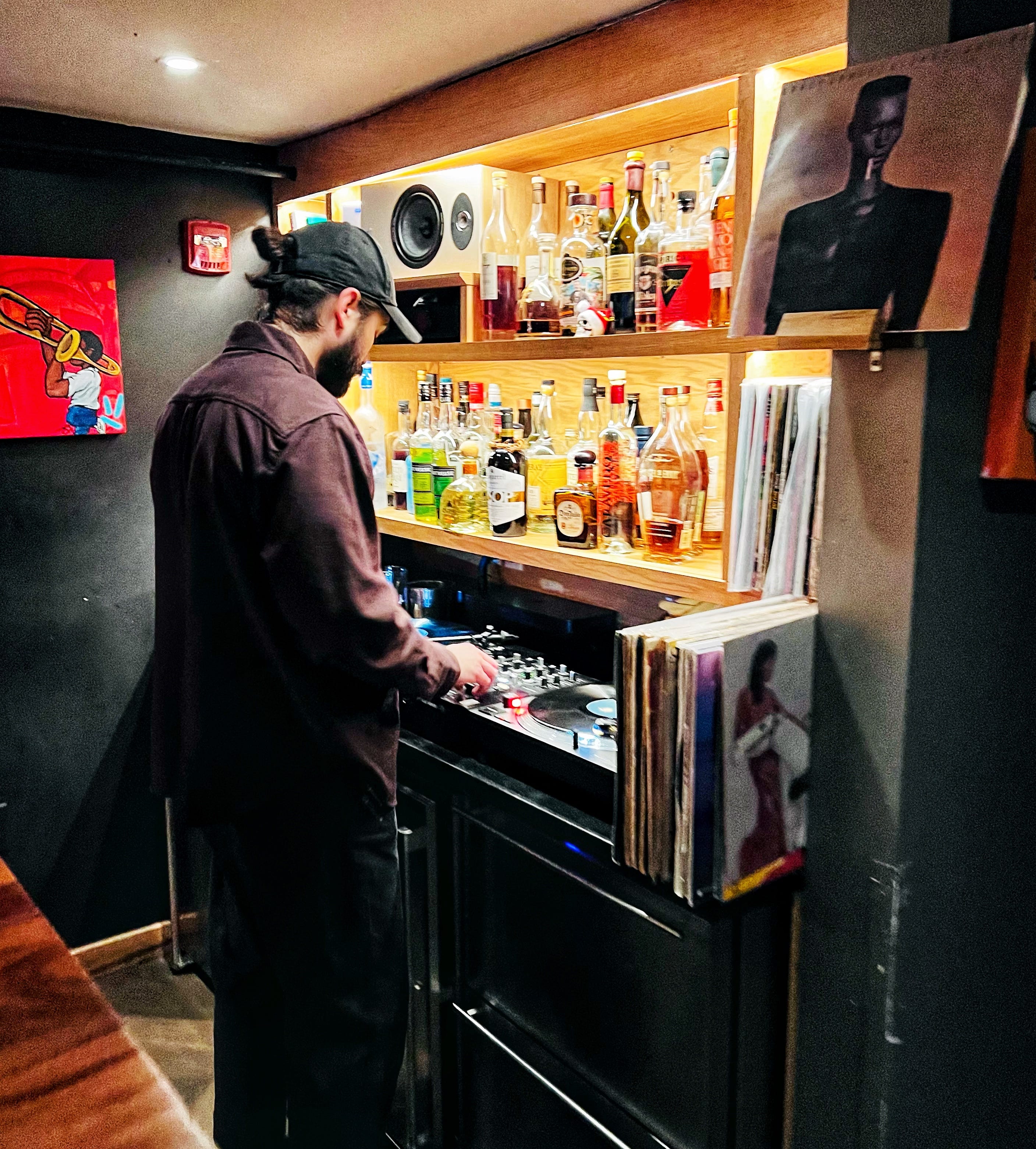
What booze reporter wouldn’t like a bar called The Press Club? Of course, it’s not that kind of press. Press, in this case, means vinyl. Yet, The Press Club takes great pains to point out it’s not a listening bar—a very trendy format these days. It is a “record bar and cocktail lounge…with the vibes of a 70s cocktail lounge and aesthetics of a 90s record shop.”
Records are played on turntables, the platters chosen by the bartenders based on the currently crowd and vibe in the room. That room, rippling out from a seven-seat bar in the far corner, is snug, sleek, modern and stylish—like the rec room of a very wealthy, very cool uncle.
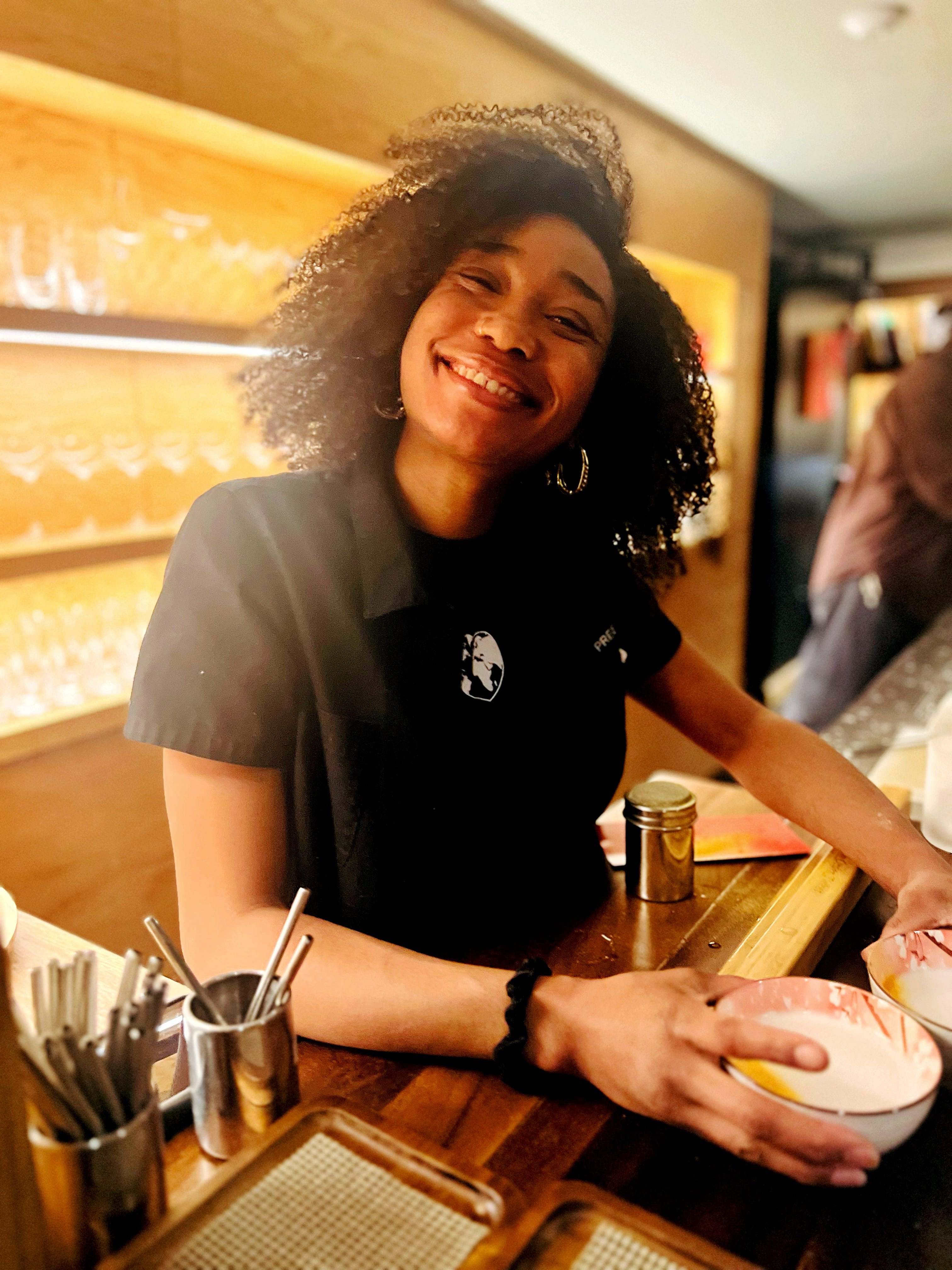
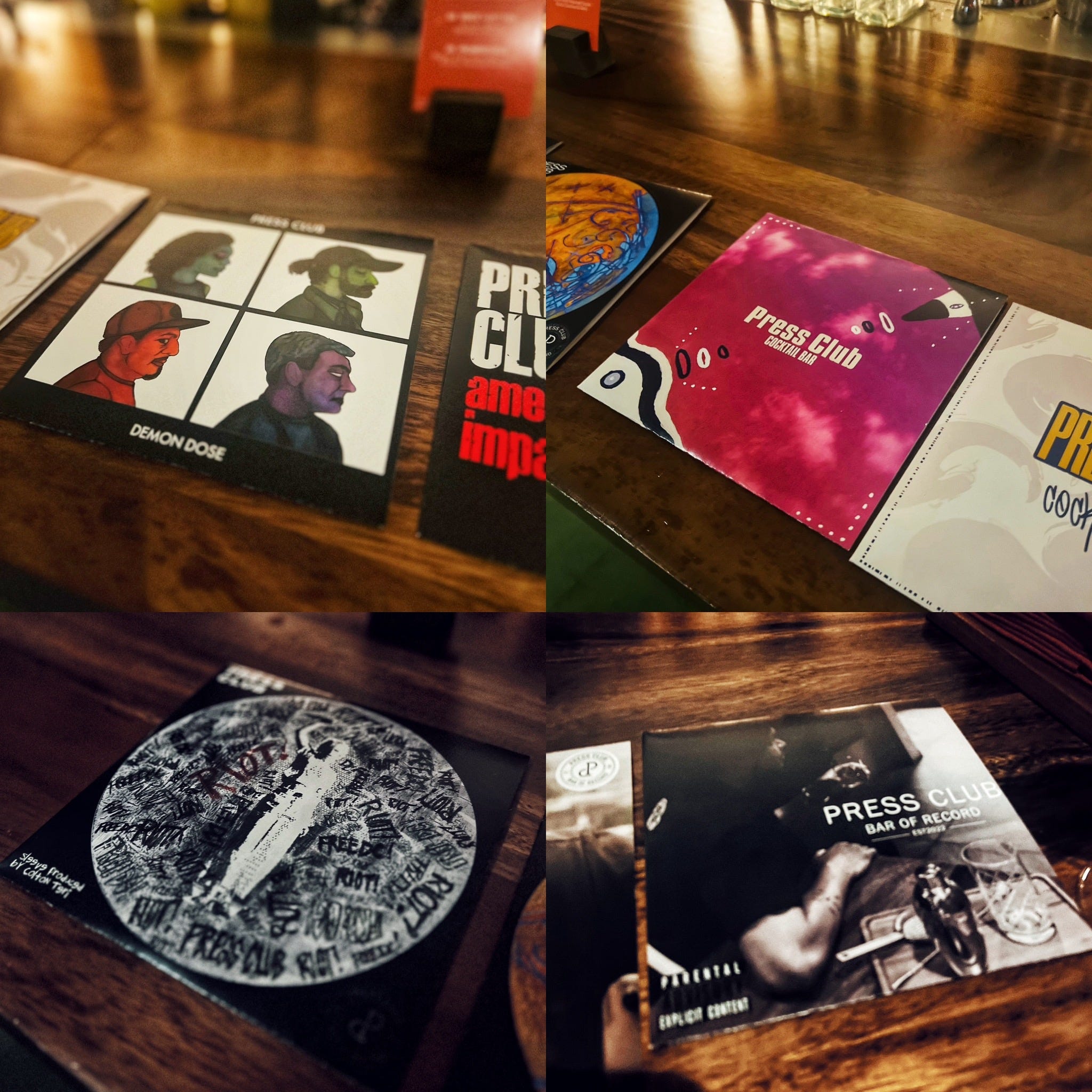
The night we spent was actually a press preview of their new cocktail menu, which much be one of the most involved I’ve ever encountered. The Press Club asked four local artists (Michael Dupuy, Colton Teri, Hailey Hartigan, and William Clarke IV aka Phresh Ingredient) to create art based on two of their favorite albums from the 2000s. Meanwhile, The Press Club, overseen by managing partner, Will Patton, plucked individual tracks from the 2000s and created cocktails inspired by them.
Among the artist albums were recordings by 50 Cent, Green Day, Gorillaz, Kanye West, Franz Ferdinand and Nelly Furtado. All of the artists were in attendance.
We got to sample four of the drinks, which were uniformly good. (The menu will drop for the public on Feb. 24.) However, my favorite—and the favorite of the room, it seemed—was the welcome drink, which was called Intro and made of gin, Skinos, Sauvignon Blanc, cucumber, mint, yogurt and cremant.
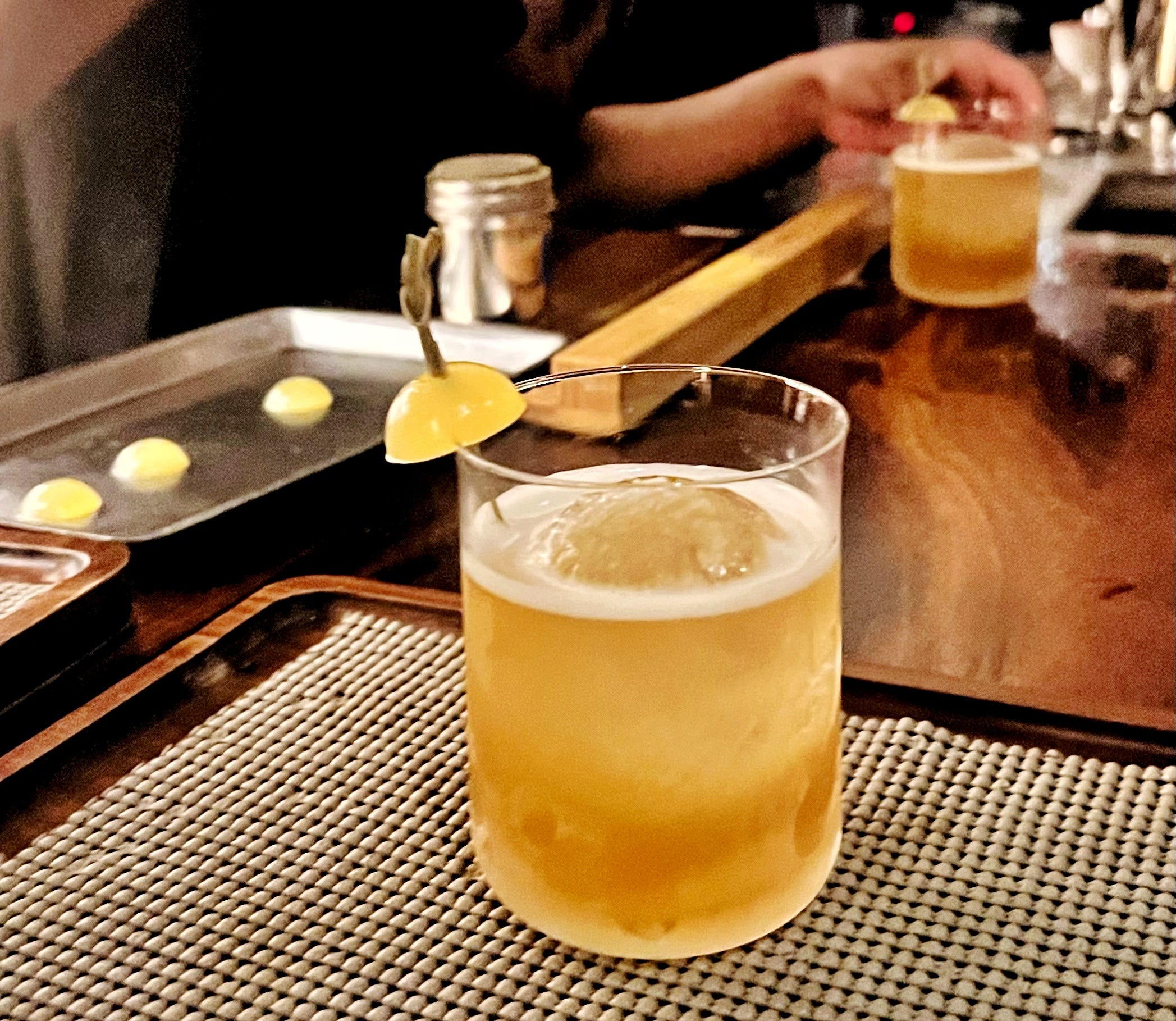
It was a very wine-y menu. Another cocktail had Albariño in it. D.C. has a way with using vino wisely in cocktails. Otherwise, the Time To Pretend cocktail, served in a bowl, had Pisco in it, continuing the Pisco theme of the trip.
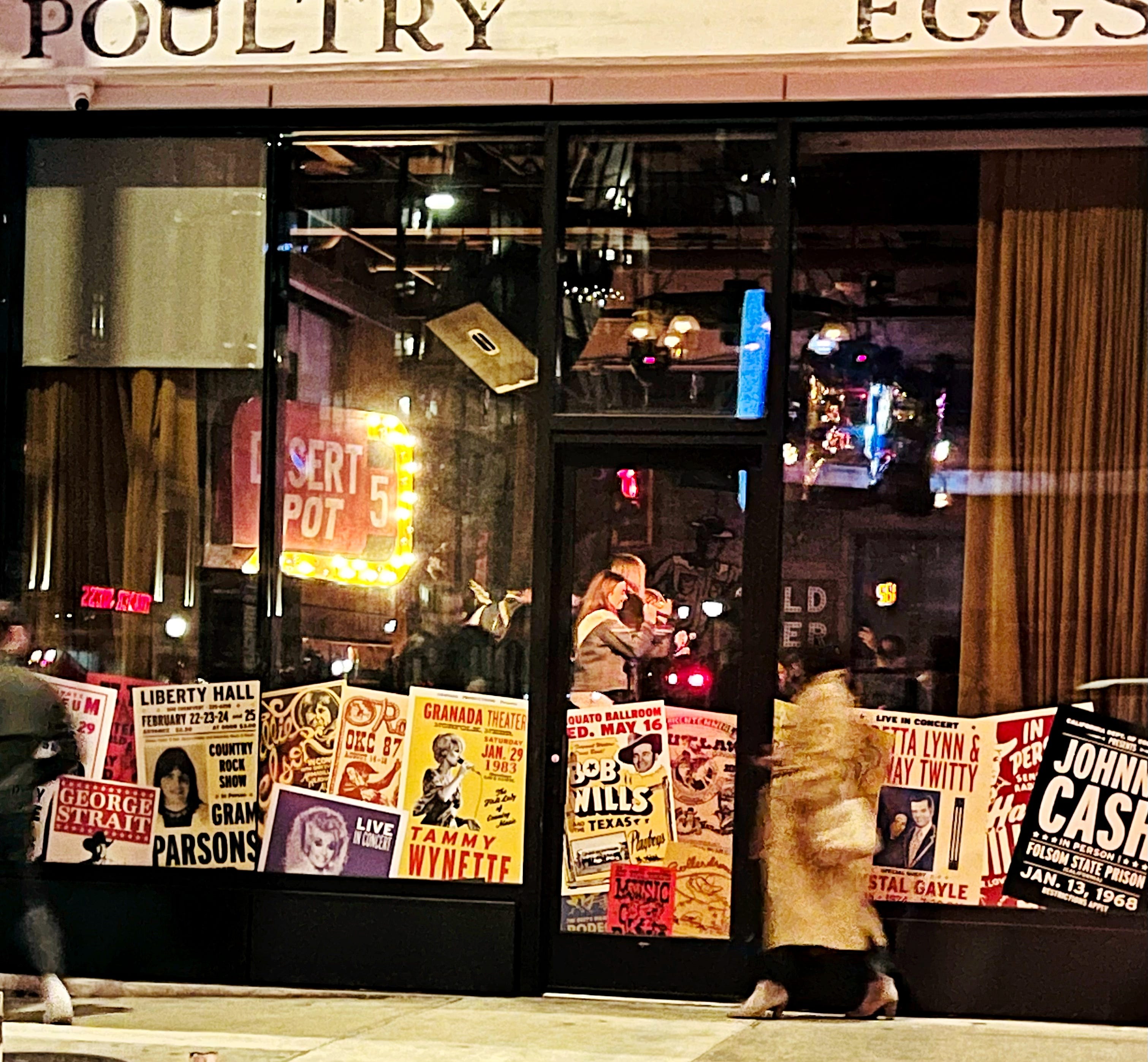
Who knew there was a honky tonk in D.C.? Who knew there was call for a honky tonk in D.C.?
But there we were at the double-decker Desert 5 Spot, where the bar stools are saddles, there’s an “Urban Cowboy”-style mechanical bull, and there were no shortage of singers, many wearing Stetsons, for the Wednesday night country music karaoke. These included a child and a first-timer truck driver who sang Ronnie Milsap’s “Prisoner of the Highway.”
Then again, Desert 5 Spot is more an urbanist’s vision of a honky tonk, something telegraphed by the fact that all its locations are in cities, including New York City and Los Angeles. The website reads, “We kindly ask y'all to abide by the cowboy dress code at Desert 5 Spot. Cowboys Don't wear athletic shorts, athletic tops, sweatpants, or flip-flops.”
I wore a suit. But I didn’t feel too bad about that. The owner is Dan Daley, who was on hand, was decked out in black from head to foot, looking more like a SoHo galleryist than the owner of a country music bar.
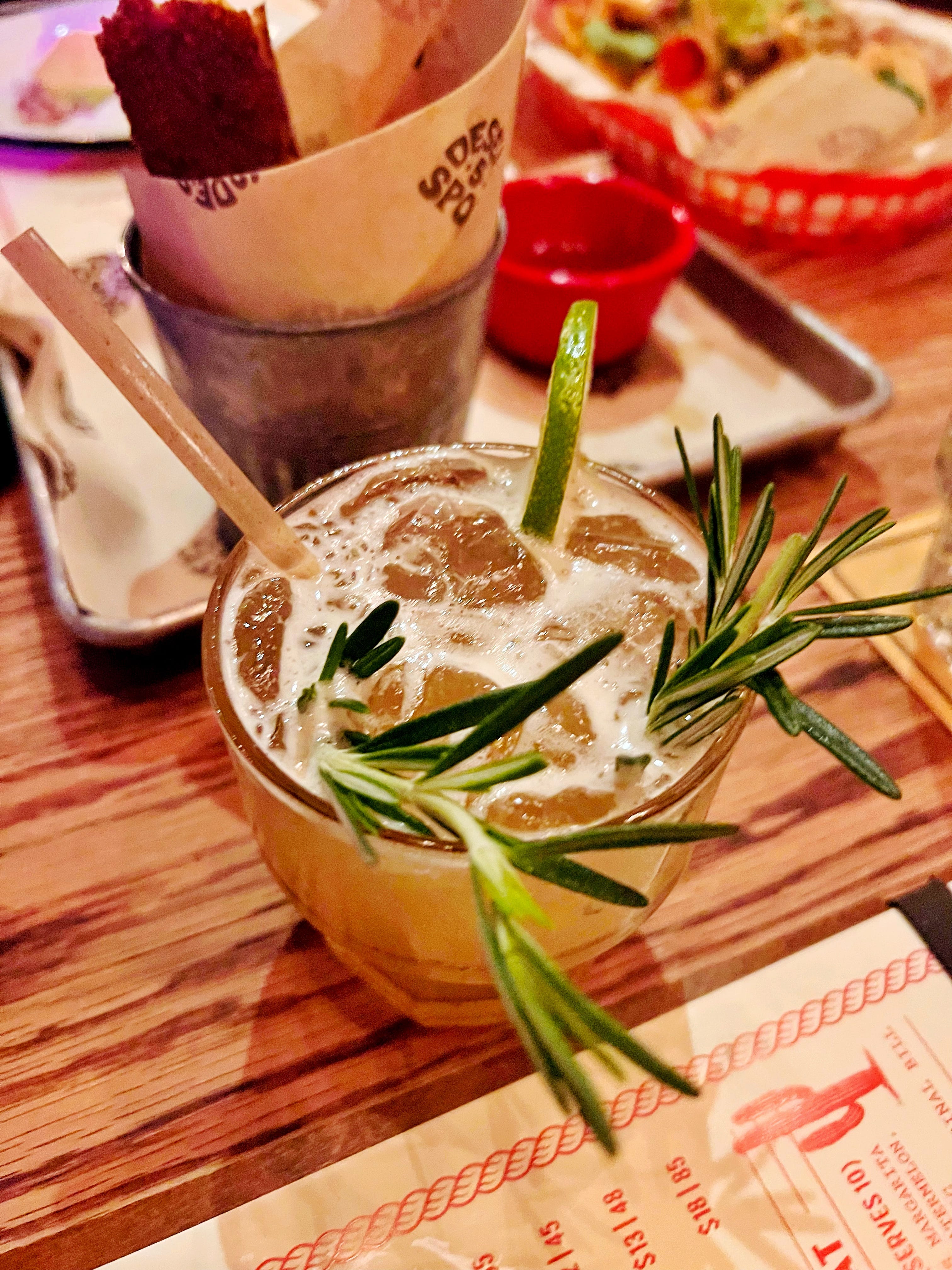
The cocktails are appropriately large and served in schooners. My favorite was the resident spicy Margarita, called the Ring of Fire. Mary Kate’s favorite was the Dropkick Me, Jesus because she loves Whiskey Sours (it was made with Bulleit Bourbon, Rosemary and lemon juice). The favorite of the table was the Jolene, made of Tequila, watermelon, strawberry, lime and mint.
One of our party, perhaps inspired by the drink, tried to sing Dolly Parton’s classic song “Jolene,” but was beaten to the mike by a birthday girl of far inferior pipes. Apparently, two “Jolene”s a night—or two renditions of any song—are not permitted by the house.
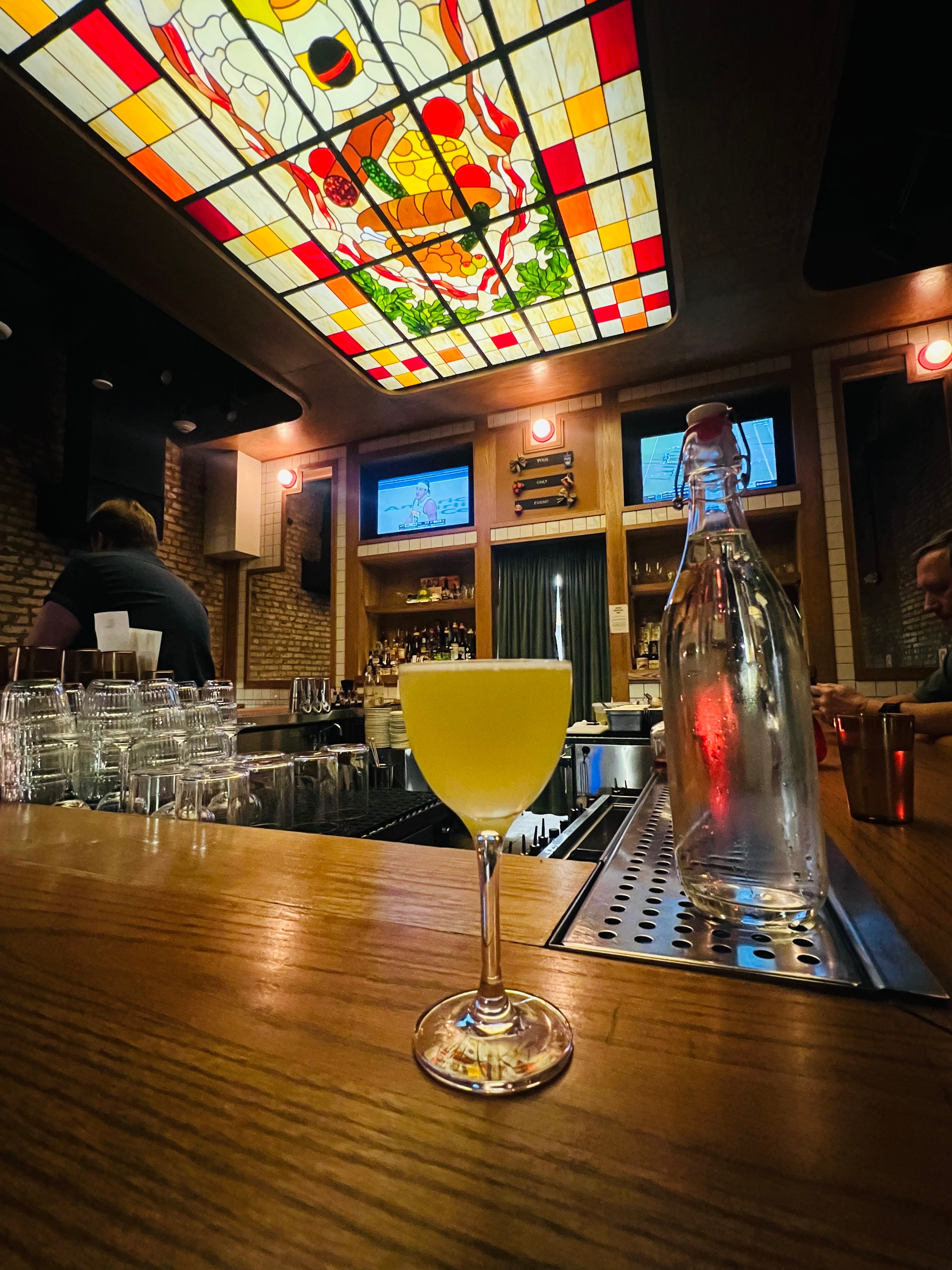
Your Only Friend is a bar so steeped in nostalgic irony, it’s like the Wacky Packages of cocktail bars. The rectangular wooden bar has a bump-out raised edge to it, something you don’t see much outside of the Midwest. (The owners are Paul Taylor and Sherra Kurtz. Kurtz spent her formative years in Chicago.) There are 1970s-TGIF-style, faux Tiffany chandeliers over the tables near the window. The grandly cheesy stained-glass skylight depicting bread, cheese, meats and, um, mayonnaise, was described by the bartender as an homage to Pizza Hut decor of yore. (It was created by Devin Balara of Solid Space Glass in New Orleans.)
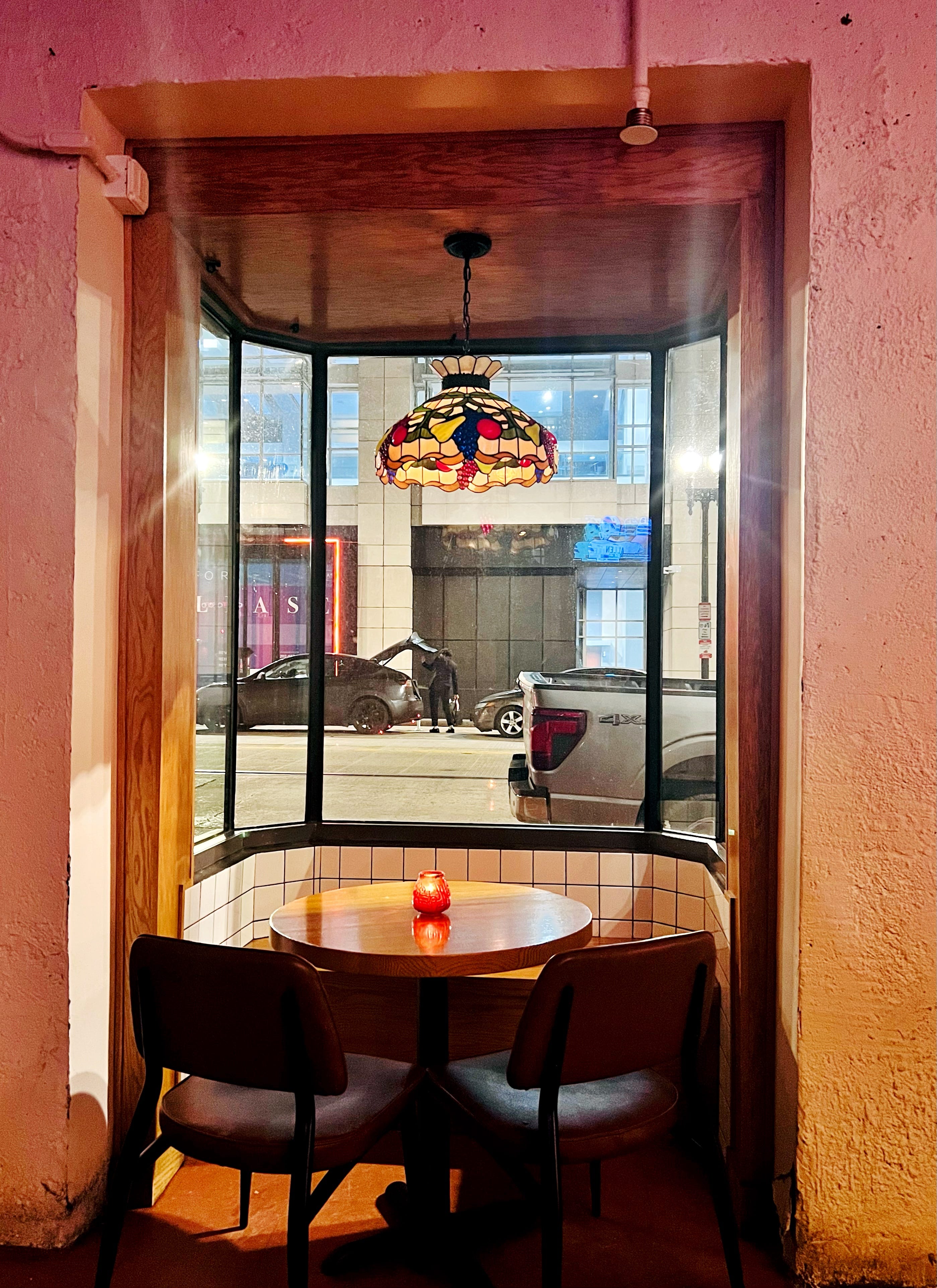
There is no cocktail on the menu that doesn’t have its tongue at least halfway in its cheek. Most are tied to ‘70s concoctions that retain a pull on the public memory. Take the Clarified Orange Julius, which combines a modern mixology technique with, well, an Orange Julius. The ingredients are vodka, Aperol, salted orange sugar, “Super Orange Juice” and clarified vanilla cream.
The modus operandi here is to mash up a Dark Ages drink, presented with no apologies, with an improving high-end ingredient. Thus, the Dole Whip is compounded with 12-year-old rum; the Carb’d Marg marries Mezcal with Smirnoff Ice and Mountain Dew (Mary Kate loved this); and the Appletini has both actual Apple Pucker and Manzanilla Sherry. I tried the latter, which was amusing, but caused me to veer in a more classic direction with my next round: the Inception Old Fashioned, in which Bourbon was injected with something called Old-Fashioned Cordial. This is basically a sugar-bitters mixture that old-school bartenders used to call “bug juice,” albeit with Bourbon and curaçao added to the mix.
We arrived too late to try any of the sandwiches at the adjoining kitchen. These were similarly high-low affairs (the Hot Nug is fast-food style chicken nuggets with Nashville hot sauce), most topped with Duke’s mayo. All looked delicious.
We chose Service Bar for our nightcap because it was open late in a city where most places shutter by midnight. (This is a Covid-bred problem in New York City these days, too. Hell, it’s a problem in every big city now). Service Bar is one of those cocktail bars—like Mother’s Ruin in New York, like Holy Diver in New Orleans, like Best Intentions in Chicago—that masks its advanced geeky cocktail core with the trappings of a regular-guy watering hole. There are utilitarian bar stools and high tops; there’s a blackboard; there’s a Miller High Life sign; and dollar bills are stapled to the wall. It’s scruffy.
Yet, the drinks are as high concept as Allegory or No Goodbyes. The thematic menu of the moment is “Birds,” with its own ornate graphic booklet, resembling very much pages from a copy of National Geographic. The drink I wanted, the Pisco-based Albatross, could not be had because an ingredient was currently unavailable. Thus, my Pisco ride came to a screeching halt. (Can some DC native please chime in here about why there are so many Pisco cocktails in the District?)
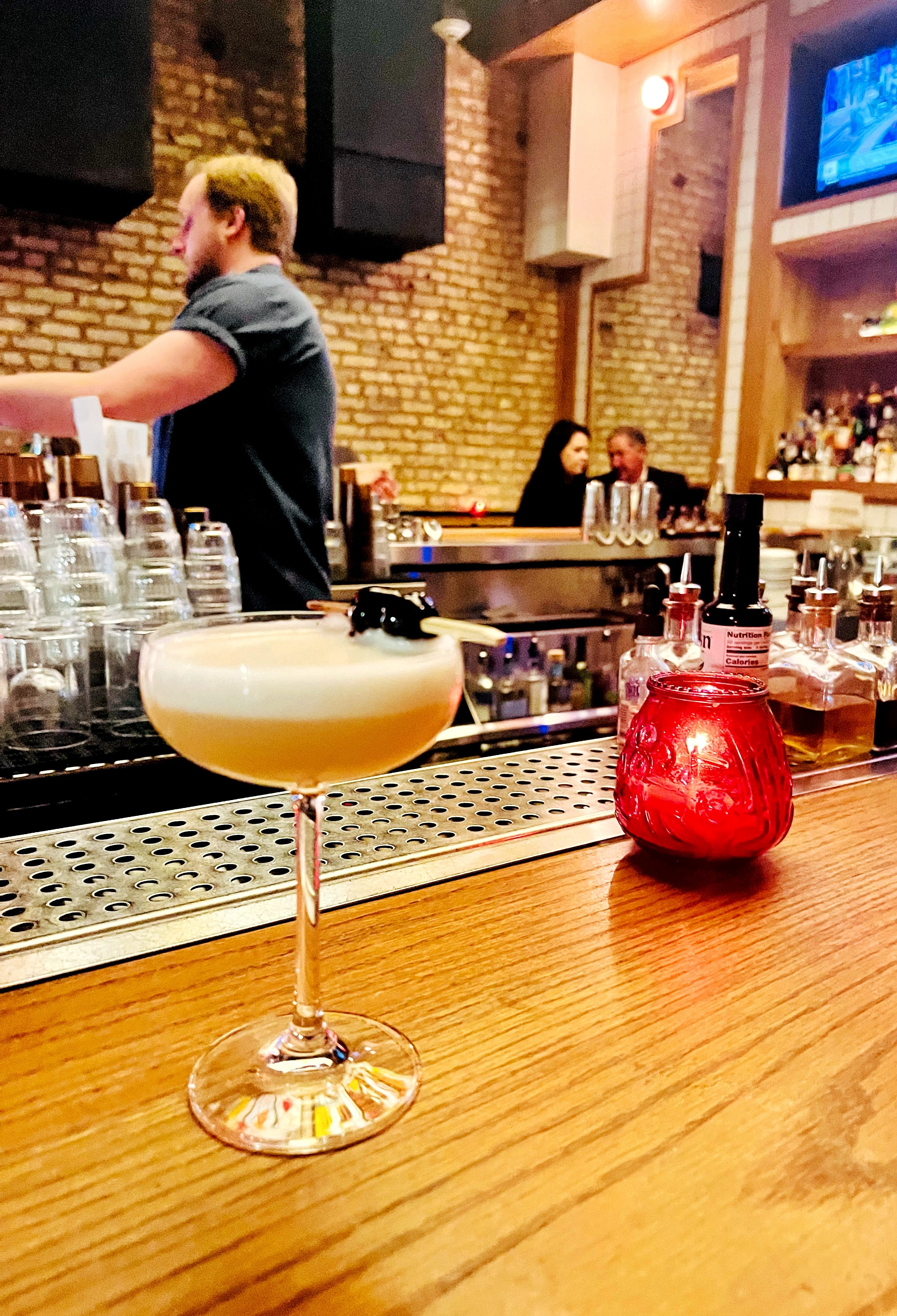
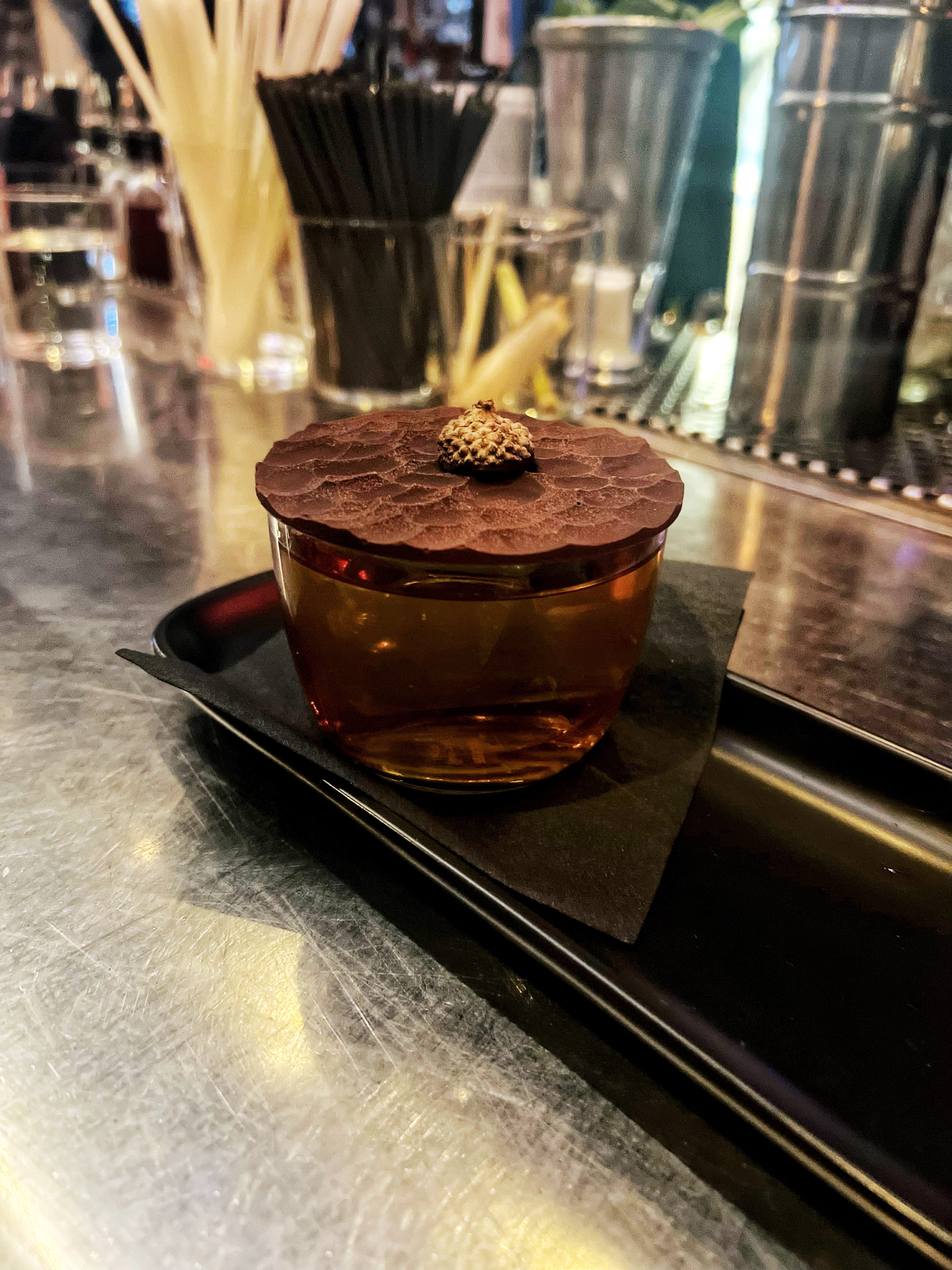
So I went with the Flying Squirrel—which is not a bird. The bartender freely admitted this. He also happened to be the author of the drink, which, at $23, was the most expensive on the menu. It was made of acorn liqueur, mushroom butter, apple, Courvoisier vs, Laird’s 7 1/2 year-old apple brandy, and Carpano Antica vermouth. It came in a squat rocks glass covered with a chocolate disk joined to an acorn-cap handle. It looked like a liquid acorn. And it tasted like a foraged nightcap, and very nice indeed at that.
Mary Kate had the North American Barn Owl, which was composed of red currant, spicebush, Wild Turkey 101 rye, Braulio, pineapple juice and Perrier and arrived with an accompanying container, which was lit on fire.
And, with that, our Washington catch-up came to a close. All told, we found a lot of great things to discover and experience in D.C., some new, some newish, some established, but all new to us—and perhaps new to anyone reading this who hasn’t been to the District since Covid. May we suggest that it’s time for a visit?
Sidebar: The Press Club Cocktail Artists
On January 14, 2026, The Mix was lucky enough to attend the launch of The Press Club’s new menu in their space in Washington, D.C.
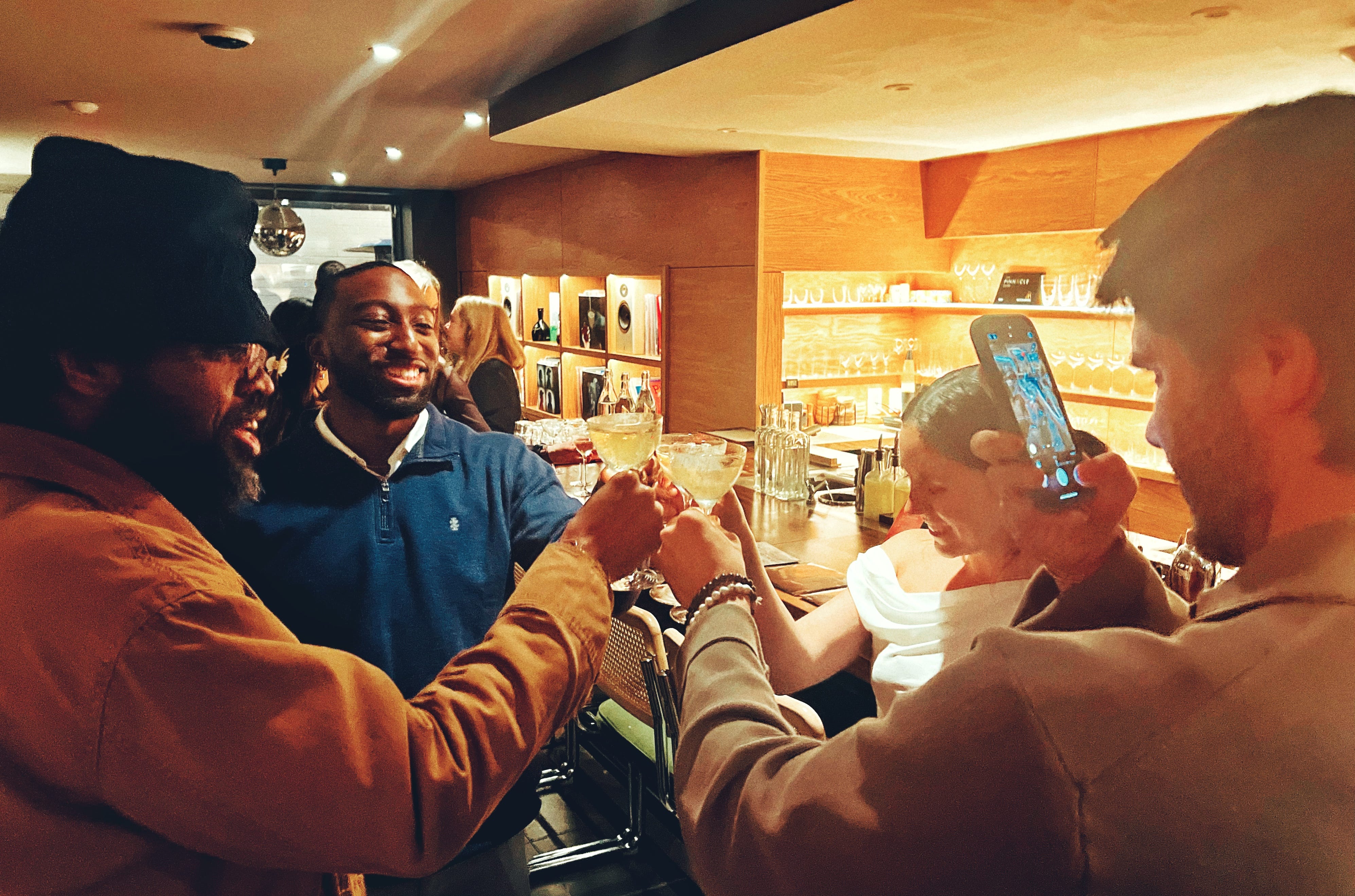
Owners, bartenders, chefs, writers (both local and national) and the artists who created the works of art for the menu, based on circa-2000s albums, were there to sip on the menu of five pretty flawless cocktails and talk about how they met and what inspired them.
Founder and co-owner Will Patton was there to introduce the group. “We’re located in Dupont Circle and there’s a huge art scene in this area,” he said. “The Phillips Collection is right around the corner, one of the best modern art places in the country. We have the Dupont Underground, which is right to the right of here, and lots of other independent galleries. So, what we wanted to do was to tie ourselves a little bit more to our community. And the idea for this menu is honestly 2000s, but we also found these four amazing artists to design our menus that look like albums.”
The Mix met with these artists. Here’s what they had to say:
THE MIX: So how did this all come about?
Hailey Hartigan: I was just sitting at The Press Club with one of my girlfriends and met (co-owner) Will Patton. Flash forward three or so months later, I’m having an art show in the Dupont Circle area. It’s right across from the Phillips Collection on gallery row and Michael and Colton were actually both a part of that show and Will reached out [about the album covers] and he asked if I had any other artists who would be interested and I invited him out to the show. I showed him Michael’s work and I showed him Colton’s work. He and I were already connected, but I showed him my stuff that was up there as well and that’s how we all got started.
THE MIX: How did you connect here?
Phresh Ingredient: I was actually one of the artists at the Dupont Underground show. I came here [The Press Club] because I had social anxiety and I came to get a beer. It was a blessing and all that; that show brought a lot of people out. So, I just took a break. Some of the homies I already knew already worked here, but I’ve never actually came here, I never visited. So I’m like, “Oh snap.” Let me go say “What’s up?” to the homies, let me get a drink. Will was like, “Yo, I just saw your work, you’re dope.” Kinda the same thing, like, “I’m looking for some artists to help us prepare the menus” so, I used some old photos and Will was like, “I know you can go deeper.” So I was like, let me do my thing. We scheduled a photo shoot, I got the employees involved. I shot them from my idea and that’s how I became a part of it.
THE MIX: So where can we see all of the artwork?
Phresh Ingredient: So, people will be able to see all of our work by just coming here and being a patron. The work are the menus.
MIX: How many works did each artist do?
Hailey: Every artist did two albums, but four physical pieces of art. And Press Club now owns that art, so they get to display it here and in future shows and help bring in community that way… The first album I did is a rendition of Demon Days, an album by the Gorillaz… And this is a rendition of Green Day’s American Idiot.
Michael Dupuy: So I did, The Graduation by Kanye West and The Massacre by 50 Cent, so when Will hit me up about this project, 2000s albums, all I could think about was rap music. Rap music is fantastic. I picked The Graduation album, because if you look at the original cover album there was a lot going on, and especially for the colors and the diametric shapes; it’s very cool from that and I wanted to draw from that and make my own shapes. I didn’t want to necessarily bring out the same shape from that cover; I wanted to get something inspired by it. Then The Massacre by 50 Cent. I just love The Massacre so much it was easy to put this together. I’m a graphic designer, so the graphic part, like the topography was easy, but I’m trying a new style, so I’m mixing paint with my graphics. And the first time I did it was for Hailey’s show. So I printed out my poster and I spray painted on it. That was the first time I did that. This time I used acrylics. It was difficult because the paint would dry so quickly, but it was a cool process and I’m proud of what I did here.
Phresh: So, I first started with the Portishead album, the album Third, and then with a Wu Tang album. But, like I said before, when I was doing my initial breakdown, Will was like, “Phresh, I know you can go deeper,” so we were in here one day, for the scheduled photo shoot and I said, “What are albums y’all are listening to right now?” And Will was like, The Blueprint by Jay-Z and the other one was Donuts by J Dilla. So, literally three days later, I came back. We used the employees to lead the photo shoot and I just did my thing. Cause when I shoot, I usually shoot raw. I’m a photo journalist, I tell stories, so this is a little different than a regular studio-type setting. It allowed me to talk to the employees and let get them involved as well.
Colton Teri: I was originally introduced to Will Patton and Press Club through Hailey Hartigan, curator and producer of a recent art exhibition at Washington Center of ADA Art Gallery, during DC’s famous “Art All Night” event, which I was exhibiting at. Will tasked us with creating a rendition of an early 2000s album vinyl, through our own artistic lens. What I immediately was drawn to were albums leaning aesthetically more towards a physical process, as it reflects how I make my work, which is sometimes messy, unpredictable, but controlled, to pull it all together. My choices were: Riot! by Paramore and Is This It by The Strokes.
The Artists:
Michael Dupuy - “Poster P” - @thepeenut_gallery
Hailey Hartigan - @haileyhartiganstudios
Hailey will be exhibiting at Earshot in New York City (earshotnyc) on February 14.
Phresh Ingredient - IG:phreshingredient
Phresh will be exhibiting starting this coming February 20 at MONAD in New York City.
Colton Teri - @coltonteri
Colton’s next show will also be on February 14th-15th at Earshot NYC (255 Canal St, NYC). This is the same show Hailey will have, a group show called “Forms of Attachment.”
Washington, D.C., Guide
No Goodbyes, The LINE DC Hotel, 1770 Euclid Street NW,
(202) 588-0525
Xiquet, 2404 Wisconsin Avenue NW, (202) 913-4671
Allegory, 1201 K St NW #1.
Death & Co. Washington D.C., 124 Blagden Alley NW, washingtondc@deathandcompany.com.
Chila Chilcano, 418 7th St NW, (202) 783-0941.
The Press Club, 1506 19th St NW.
Desert 5 Spot, 400 Morse St. NE, HOWDY@DESERTFIVESPOTDC.COM.
Your Only Friend, 1114 9th St. NW, (202) 912-1999.
Service Bar, 926 U St. SW, (202) 462-7232.
Drinking with Landmarks
At the beginning of last year, Mary Kate wrote a piece called ”Drinking With Landmarks,” which discussed one of our favorite pastimes: finding Interior Landmarks in which to eat and drink—not just New York, but everywhere we go. We heard a lot from folks and were pleased there were more than a few on our list of landmarks that they didn’t know about previously. So, we are going to keep adding to the list and hopefully, wherever you may be going, we’ll have a spot for you.
The Pied Piper Bar in the Palace Hotel in San Francisco
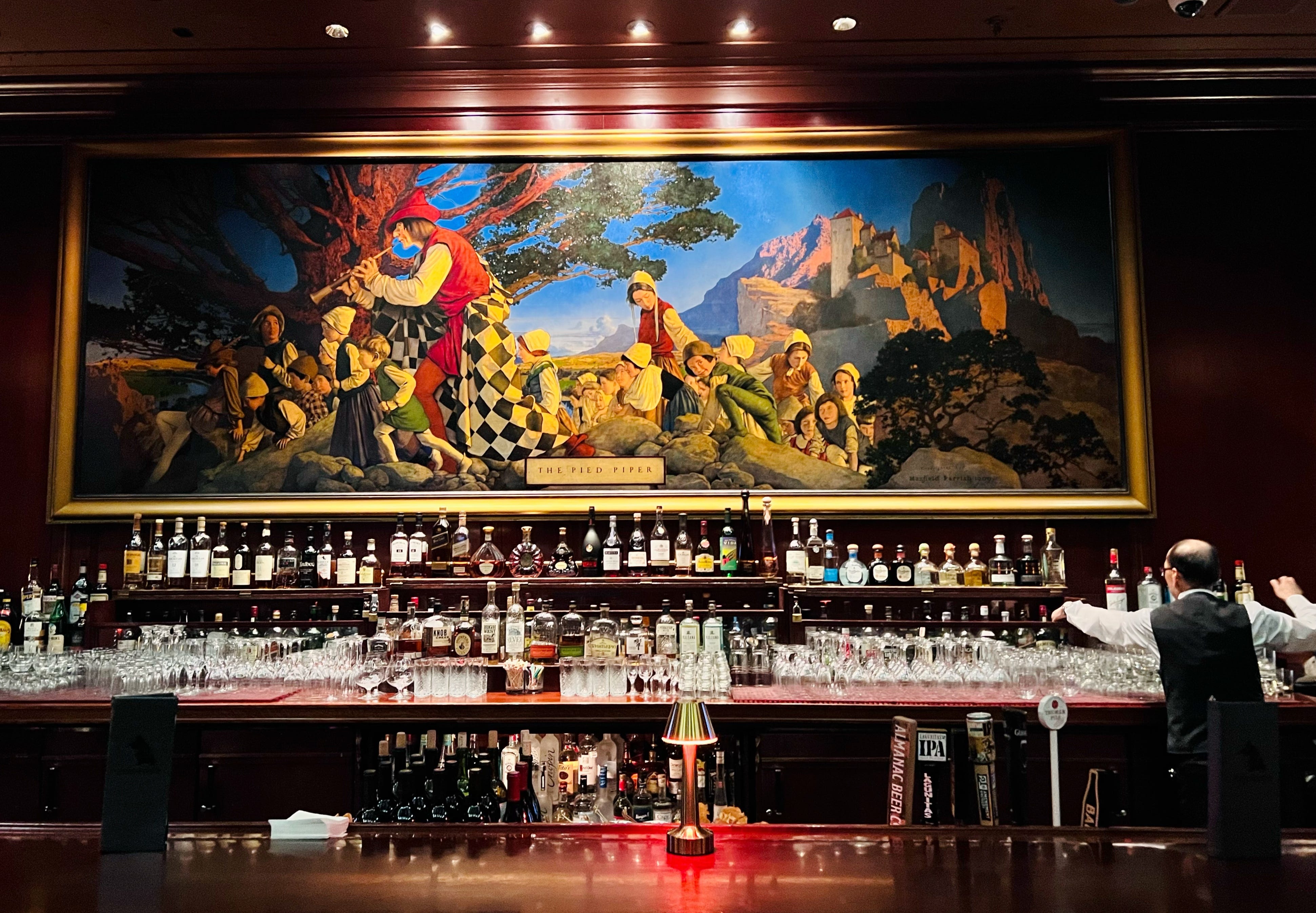
Back on March 22, 2013, the Palace Hotel shocked the world by removing Maxfield Parrish’s painting The Pied Piper of Hamelin and said that they would be selling it. The bar had basically been built around the painting and the Parrish mural had held court there since its opening in 1909. The Palace was quoted as saying, “It is no longer practical for the hotel to display an original work of this value and cultural significance in a public area.”
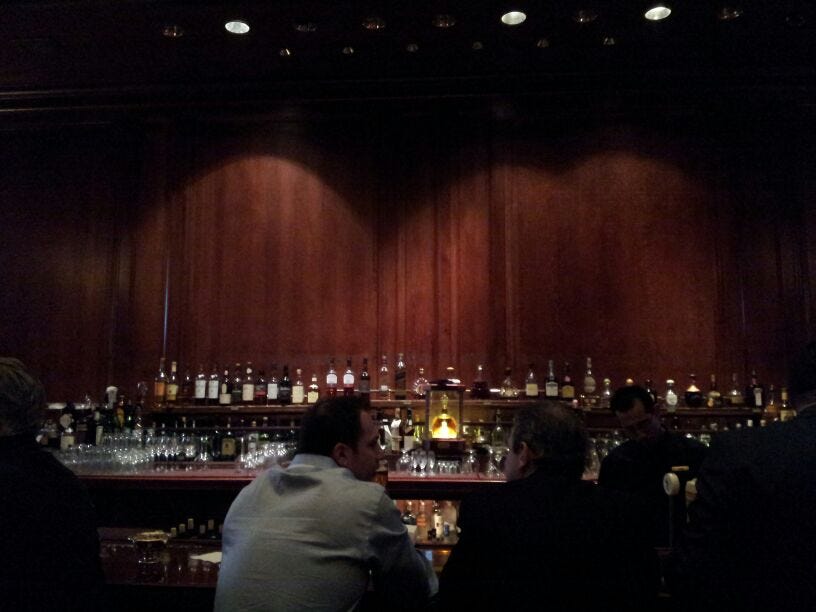
“Public area” is the key phrase here. As time passes, more and more art and significant interiors are locked behind closed doors, whether they enter the private sector via auction or are relegated to specific groups when spaces become private clubs, etc.
Landmarked Interiors are significant in that, legally, they must be open to the public. The Mix wants you to take advantage of these spaces and enjoy them while we can. Fortunately for us, Parrish’s painting was returned to its place of honor in August of 2013 and is still there.
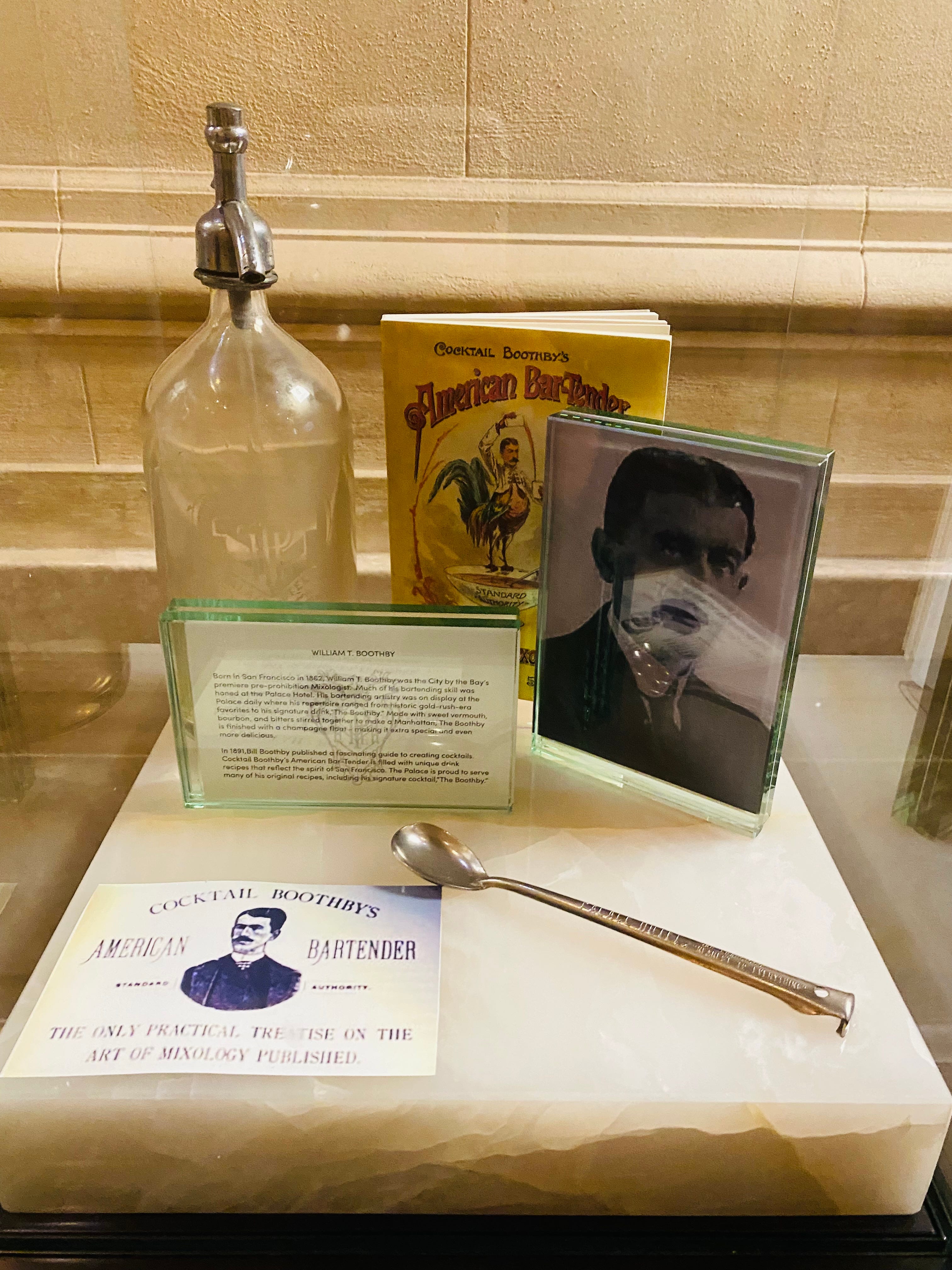
It isn’t just the mural that makes this experience stellar. There’s also the history behind the bar. The creator and namesake for my favorite drink, William Boothby, created that drink while working at the Pied Piper in the early 20th Century. That was the first cocktail we ever published in The Mix in 2022 and Robert wrote about our love of the Boothby in another post two years ago.
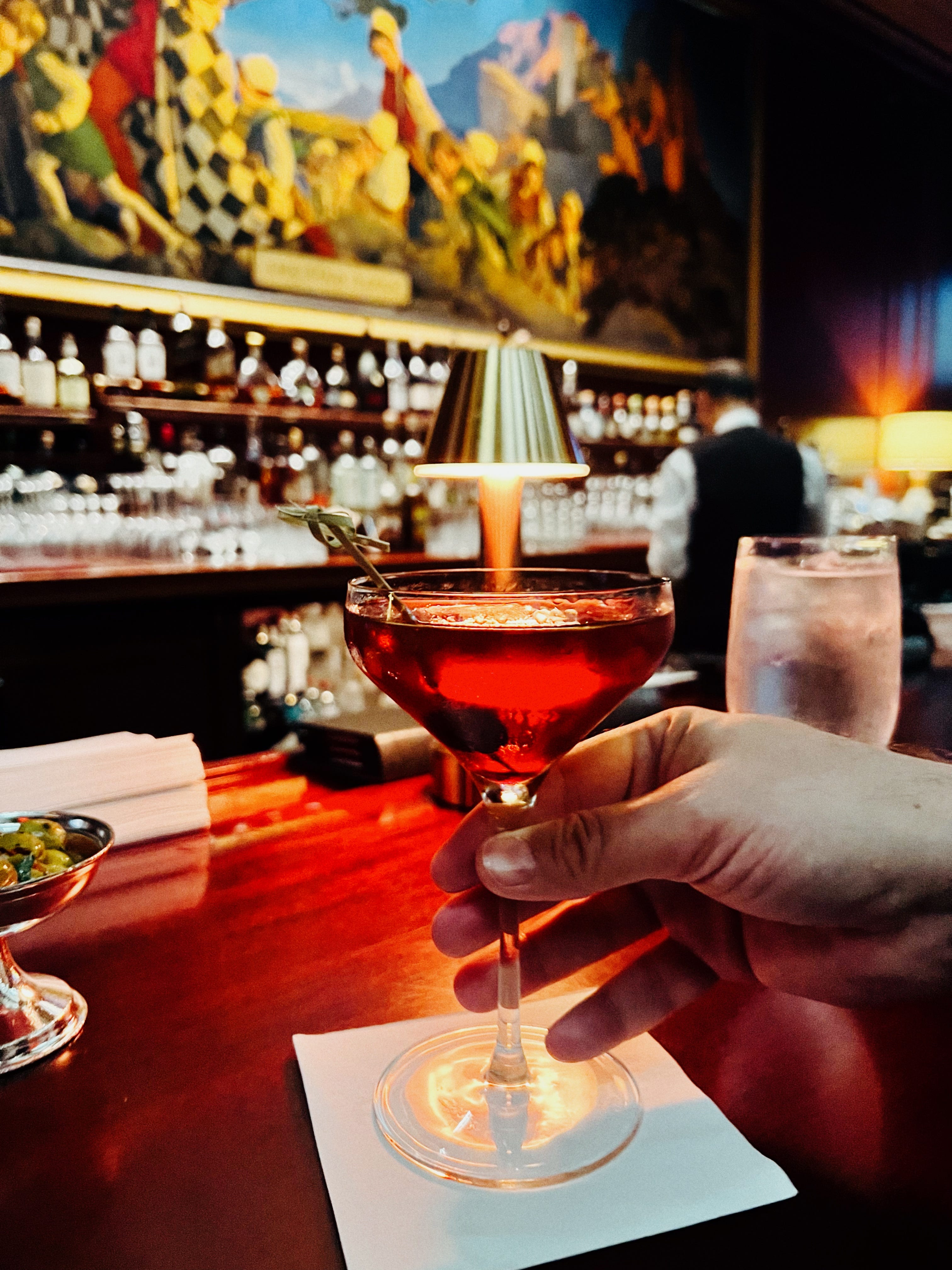
So, you can imagine what it’s like to sit there, mesmerized by the same mural that Bill Boothby slung drinks in front of more than a hundred years ago, and sipping on the cocktail that he created there. Get yourself there, if you haven’t been already! Also, be aware: sometimes they have the Boothby on the menu and sometimes they don’t. But they will always make it for you.
Cheers!
Odds and Ends…
The James Beard Awards announced the Restaurant and Chef Awards semifinalists last week. As will be detailed in The Milwaukee Mix on Wednesday’s post, there was a plethora of nominations for Wisconsin restaurants, bars and chefs. Since this column is about D.C., let’s talk about that city’s nominations. Among the District nominees were: Scott Drewno and Danny Lee, Fried Rice Collective (Anju, Chiko, and I Egg You) for Outstanding Restaurateur; Peter Pastan of 2 Amy’s for Outstanding Chef; Centrolina for Outstanding Restaurant; Anthony Jones of Marcus DC for Emerging Chef; Maison Bar à Vins for Best New Restaurant; Susan Bae at Moon Rabbit for Outstanding Pastry Chef or Baker; Brent Kroll of Maxwell Park for Outstanding Professional in Beverage Service; Christine Kim of Service Bar (whom I profiled in Imbibe magazine recently) for Outstanding Professional in Cocktail Service.

This trip made me think there need to be more cocktails that incorporate wine intelligently.
I'm so happy to see that Death & Co. kept the Columbia Room mosaic. I appreciate their appreciation for bar history.